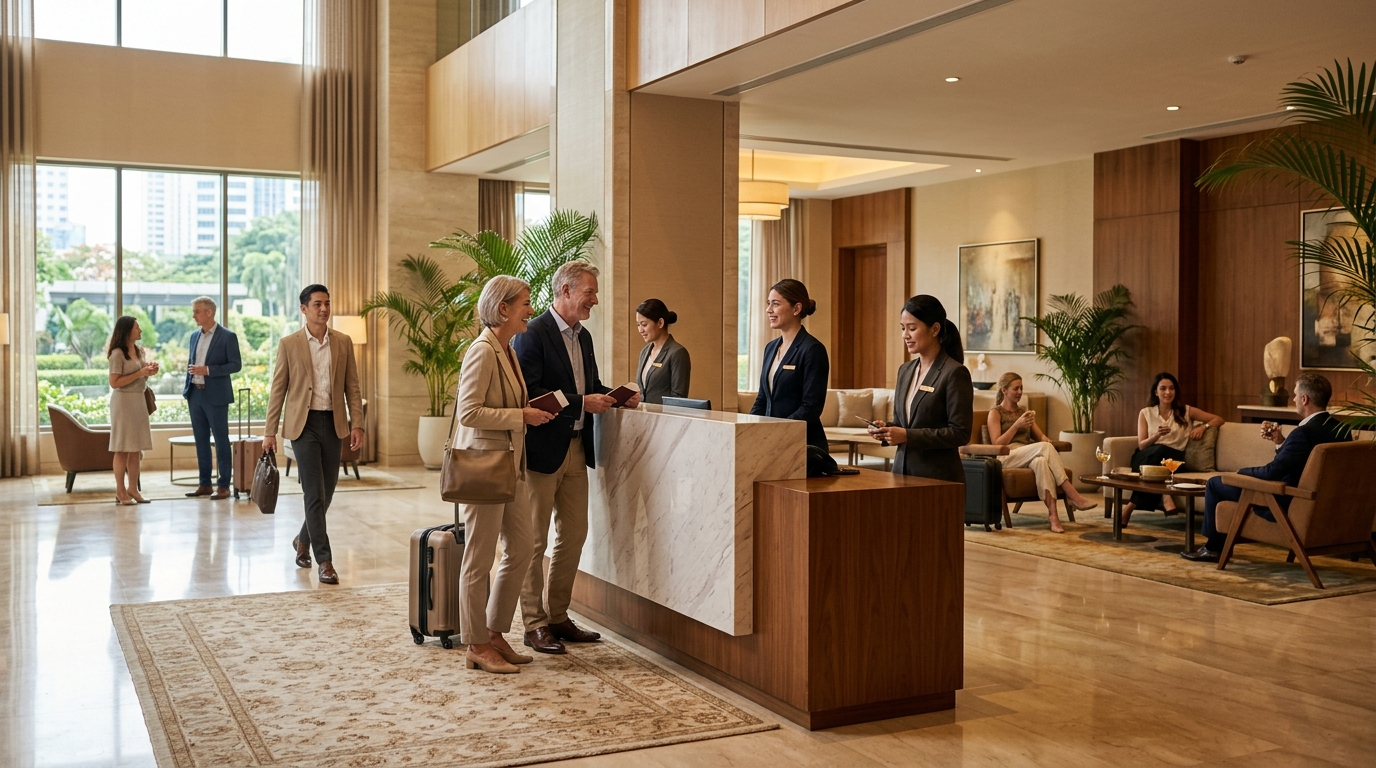
Reception is overwhelmed. The same questions repeat dozens of times a day — restaurant hours, Wi-Fi password, how to book a sun lounger — while guests who need real attention wait. The team holds on, but NPS reflects the slowness and GOP faces silent pressure from overtime and staff turnover.
The real problem: reception as a bottleneck for everything that shouldn’t reach it
In most hotels, reception remains the only effective contact channel for guests during their stay. That makes sense for handling complex situations, complaints or moments that require human judgement. What doesn’t make sense is having that same team spend hours answering repetitive questions, managing minor requests or confirming information that’s already available somewhere in the hotel that nobody ever checks.
The result is predictable: longer waiting times, lower quality in personalised attention and a team that starts the next shift already worn out. When ADR rises and occupancy presses, the volume of interactions keeps growing, but staffing levels don’t scale at the same rate.
On top of that, a good portion of queries arrive outside peak staffing hours — late at night, early in the morning — precisely when the guest-to-staff ratio is most unfavourable. A guest who doesn’t get an answer at 11pm about whether the spa opens early the next morning doesn’t forget it when they fill in the satisfaction survey.
Guest service automation is not a trend: it is a concrete operational response to a problem that has been building up at reception for years. The question is not whether to automate, but what to automate and how to do it without the guest feeling they are talking to a cold system.
The solution: conversational AI that acts as an extension of the team, not a replacement
A well-configured AI chatbot for hotels does not try to replace reception. What it does is absorb the volume of repetitive queries and low-value operational requests so that the team can concentrate on what really matters: interactions that generate upselling, build guest loyalty or resolve issues that require judgement.
The difference between a basic chatbot and one based on conversational artificial intelligence lies in the ability to understand context. Guests don’t write in forms, they write the way they talk. They ask “what time does the pool close?” but also “our child has a fever tomorrow, is there a pharmacy nearby?” or “can we change rooms — ours faces the car park?”. An AI-based system can handle that variability without falling back on predefined responses that frustrate more than they help.
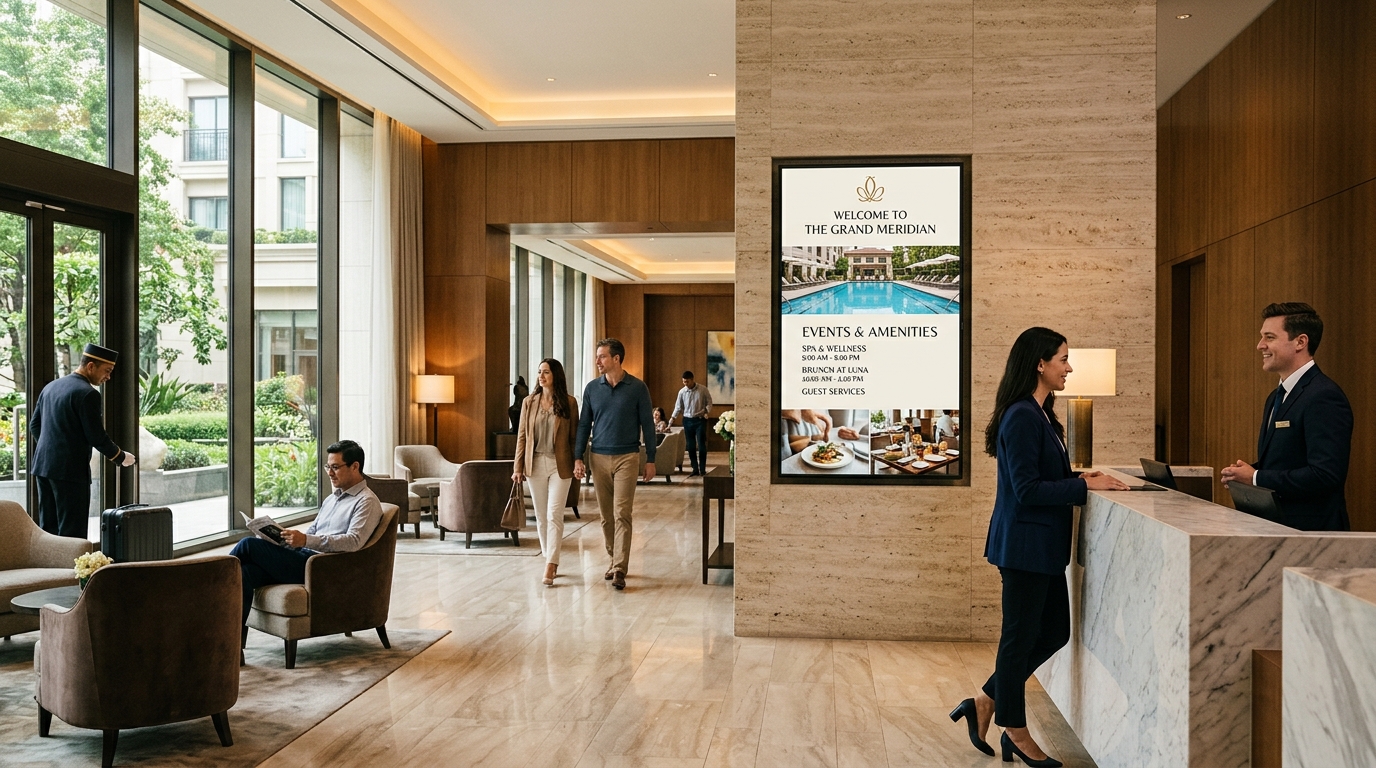
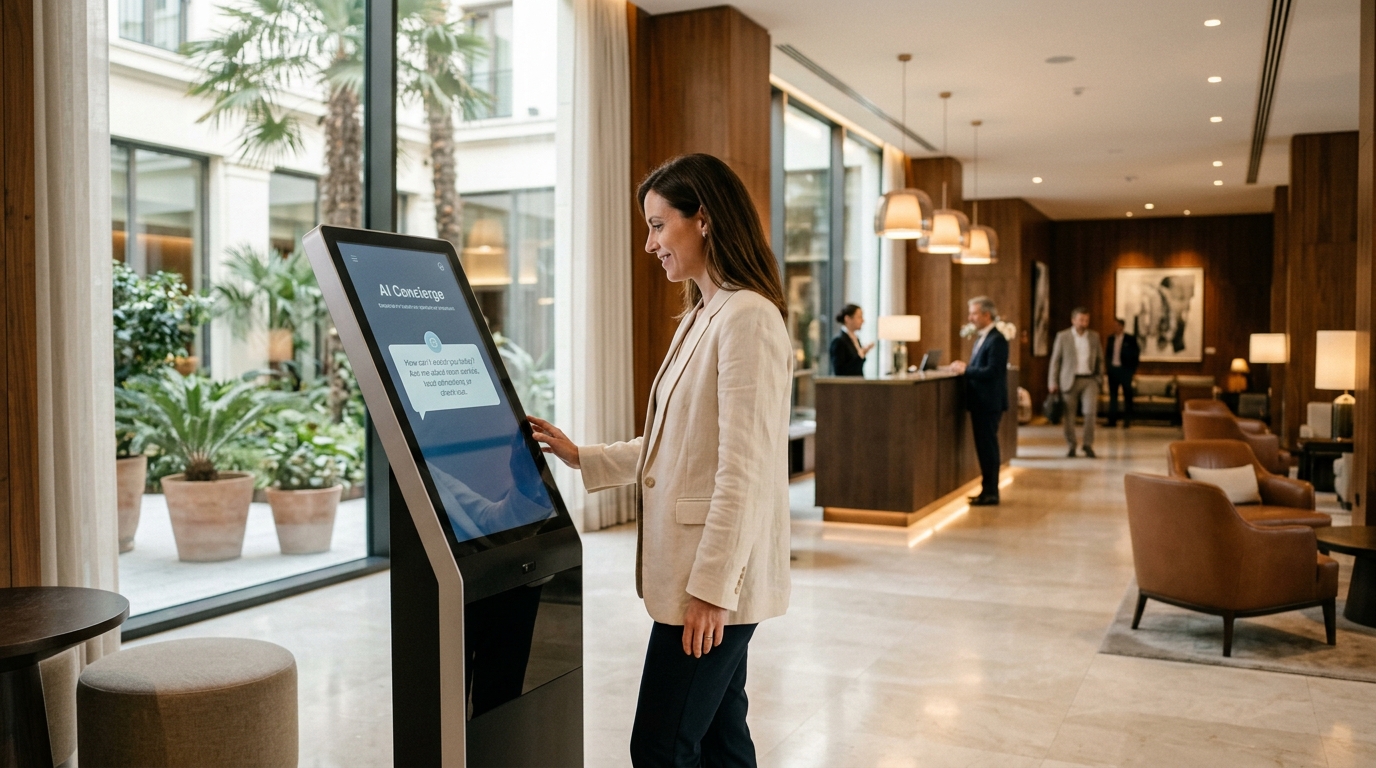
Hoteligy AiChat is designed to integrate with the rest of the hotel’s digital touchpoints — Guest WebApp, Smart TV, Kiosks — so that the guest can access the chat from any device without downloading anything. That matters: download friction kills usage before it even starts.
Guest service automation also opens up a genuine ancillary revenue channel. The chatbot can suggest a restaurant reservation when the guest asks about opening times, offer a spa treatment when they enquire about hotel services, or remind guests about room service during late-night activity. It’s not intrusive if the context is well thought through.
How to apply it in practice: configuration, flows and metrics that matter
Deploying an AI chatbot for hotels is not about switching on a tool and waiting. The difference between a deployment that works and one that gets abandoned lies in how the flows are designed and how impact is measured from the very first month.
First, define what volume you want to redirect away from reception. Before configuring anything, spend two weeks analysing the types of queries that arrive at reception in person and by phone. Classify them by frequency and complexity. High-frequency, low-complexity queries are the primary target: service information, opening hours, facilities, room supply requests, restaurant reservation status. That block can account for more than half of the daily volume.
Train the chatbot on the real language your guests use, not the hotel’s internal language. Guests don’t call the thermal pool area the “hydrotherapy zone”, and they don’t say “room service request” when they want to order something. Gather real terminology from TripAdvisor reviews, satisfaction survey comments and the actual records of calls to reception. That vocabulary is what the system needs to understand.
Integrate the chatbot with the hotel’s operational modules. A chatbot that only provides information but takes no action has a short lifespan. Guests want a response and action: book a table, request an extra pillow, report an issue. When the system can close that complete loop — query, action, confirmation — the impact on NPS is tangible and the operational relief for reception is real.
Set up a clear escalation protocol. The chatbot must know when it’s not enough and hand the conversation over to a human agent without the guest feeling they’ve taken a step backwards. The handover must be seamless: the agent receives the context from the prior conversation and doesn’t start from scratch. That is critical for the reception team to see the chatbot as an ally rather than a source of problems.
Measure from day one with metrics the hotel already uses. The volume of interactions resolved without human intervention, average response time, the impact on the communication score within NPS and the ancillary revenue attributable to chatbot suggestions. Without those indicators, the tool is invisible to management and loses internal backing.
Don’t neglect team onboarding. Reception needs to understand what the chatbot does, what kind of conversations it handles and how to access the chat history when they need context. If the team doesn’t trust the tool, they won’t integrate it into their workflow and the deployment loses effectiveness.
Conclusion
A well-deployed AI chatbot for hotels is an operational decision that directly impacts service quality and the efficiency of the reception team. It’s not technology for technology’s sake: it’s about redirecting the volume of repetitive queries so the team can do what truly generates value. The guest gets an immediate response, reception recovers capacity, and the hotel gains an additional lever to improve NPS and ancillary revenue without increasing headcount.
Want to see how Hoteligy AiChat works in a real environment? Request a demo at hoteligy.com/demo and we’ll review it with your operation’s data.