The buffet remains one of the highest-friction spaces in any hotel: outdated paper labels, poorly signposted allergens, inaccurate nutritional information and staff answering the same questions dozens of times a day. In 2026, that scenario has no operational or guest experience justification.
The real problem behind paper labels
The buffet concentrates more guest touchpoints than almost any other area of the hotel, yet it remains one of the last to be digitalised. Physical labels get wet, stained, lost or become outdated when the chef changes an ingredient at the last minute. The result: guests with allergies who cannot trust the information on display, front-of-house teams overwhelmed with basic queries and a brand image that falls short of the rest of the property.
Beyond image, there is a concrete operational problem. Every time a dish or ingredient changes, someone has to reprint, laminate and manually place the new label. In a resort with multiple food and beverage outlets, that multiplies management time and the margin for error. A wrongly indicated allergen is not just a service failure: it is a legal and reputational risk that no F&B director wants to take on.
The situation becomes more complex when the property hosts guests of different nationalities. Paper labels are typically available in one or two languages, leaving part of the dining room without adequate information and creating an uneven experience. In resorts with a high mix of source markets, this translates directly into a poorer perception of service and, ultimately, lower NPS scores in the food and beverage categories.
The buffet deserves the same level of digital attention as check-in or room service. And the solutions already exist.
What changes with digital buffet signs
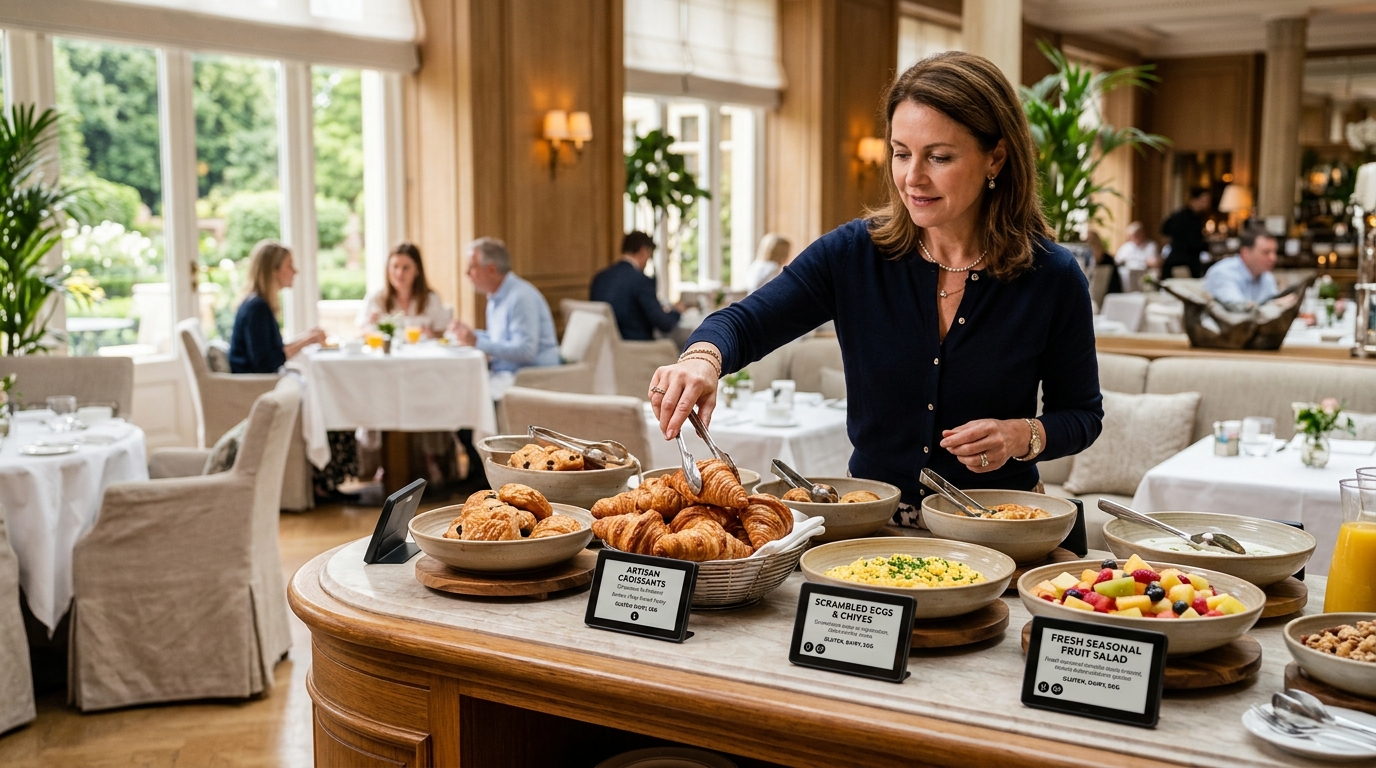
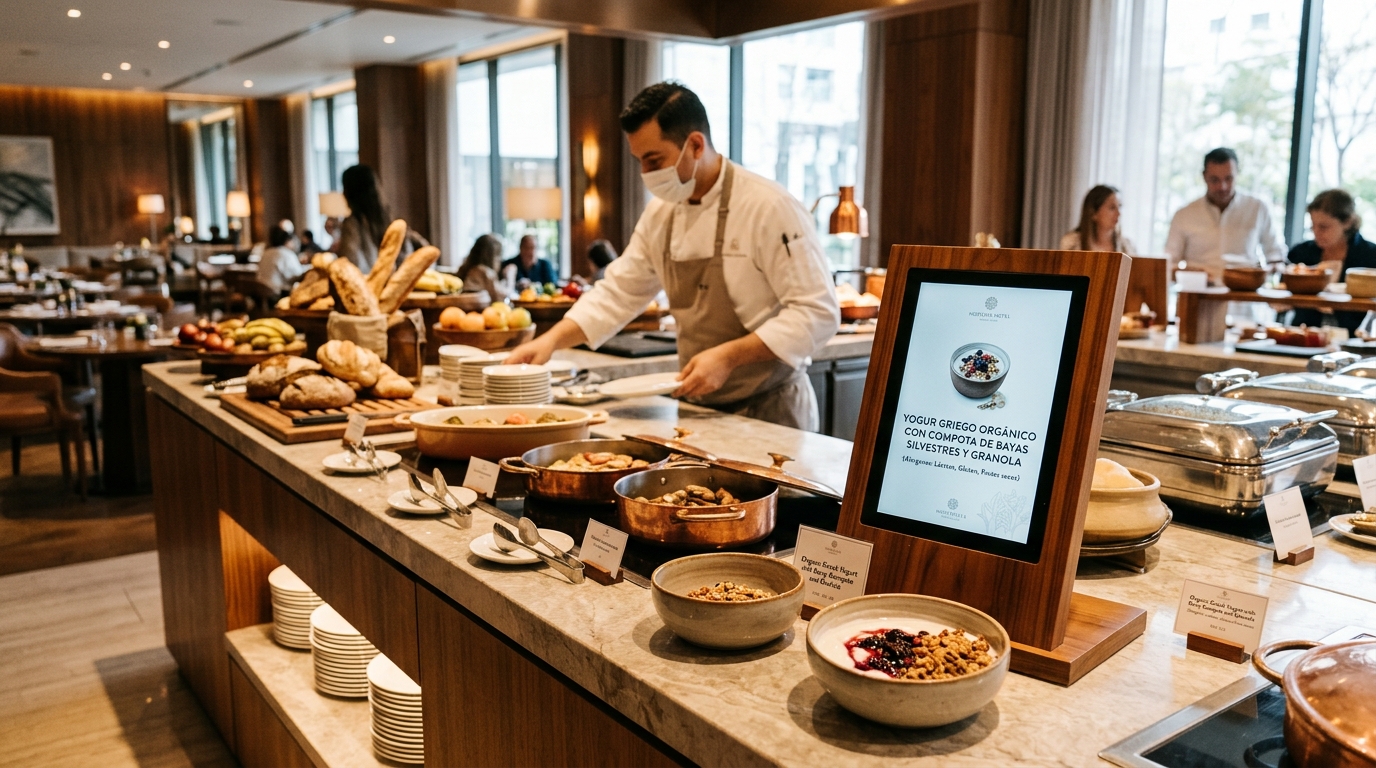
Digital buffet signs — also known as digital buffet tags or digital buffet labels — are small screens installed at each buffet station that display in real time the name of the dish, ingredients, allergens, nutritional information and product origin, in multiple languages simultaneously or on a rotating basis.
The difference compared to paper is not merely aesthetic. Management is centralised: any change to the menu is pushed to all buffet screens from a single control panel, with no need to print anything or visit each station individually. This reduces errors and frees up staff time for tasks that genuinely add value.
From the guest perspective, the experience is clearer and more autonomous. A guest with a gluten intolerance can identify at a glance which dishes are safe, without having to interrupt staff or doubt the information provided. That autonomy reduces anxiety at the point of consumption and improves the overall perception of the service, which ultimately shows up in F&B satisfaction scores.
The multilingual component is particularly relevant in destinations with a high diversity of source markets. Displaying information in the guest’s own language — or in several languages on a rotating basis — is not a minor detail: it is a direct signal that the hotel has thought about their specific experience.
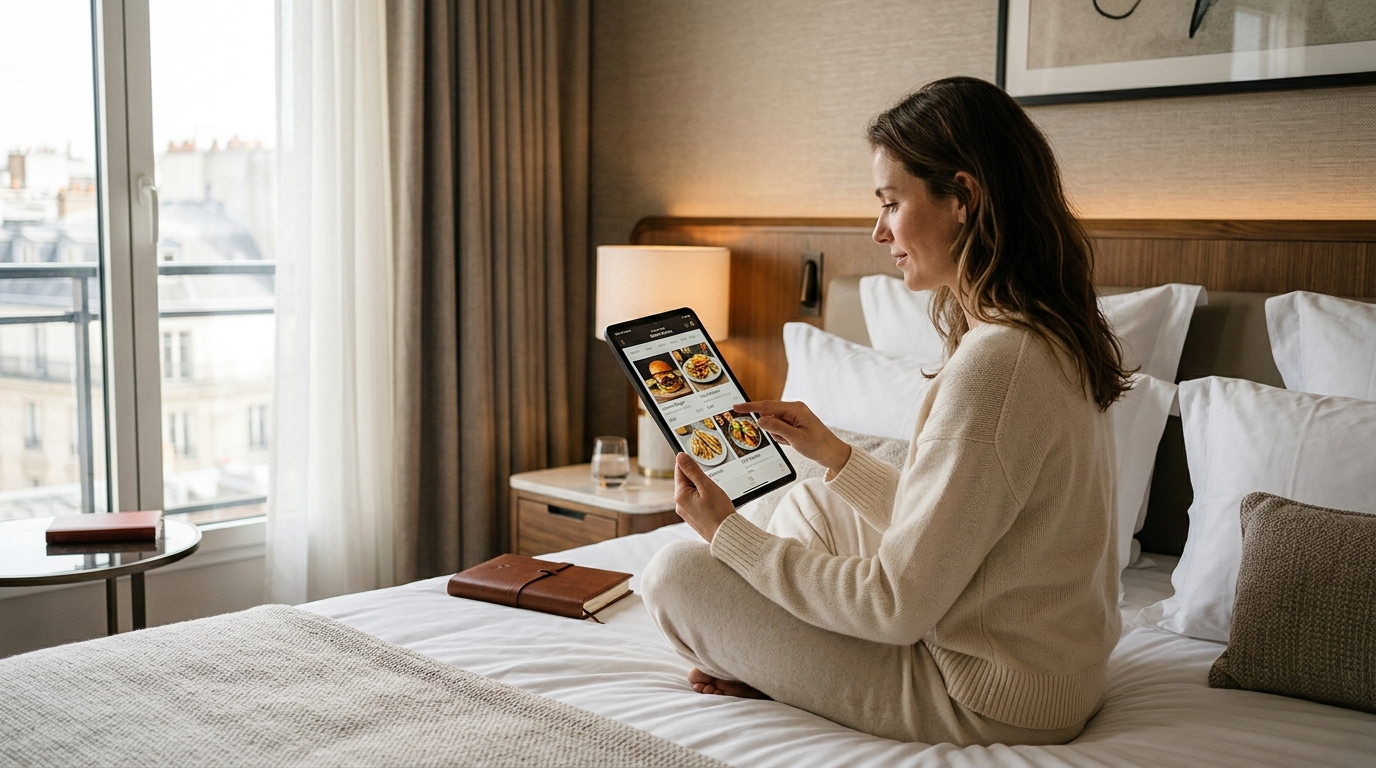
Platforms such as Hoteligy integrate digital buffet tags within the same CMS that manages all other digital touchpoints in the hotel, making it possible to maintain content consistency across the buffet, the digital menu, the TV channel and the Guest WebApp.
How to implement it without complicating operations
The aspect that concerns F&B teams most is not the technology itself, but the change to existing workflows. The good news is that the adaptation curve is short when the implementation is well planned.
First step: audit the current buffet. Before installing anything, it is worth mapping how many stations the buffet has, how frequently the menu changes (breakfast, lunch, dinner, seasonal variations) and what information is mandatory under local allergen regulations. That inventory determines how many screens are needed and which fields each label must include.
Second step: content structure. The greatest benefit of digital buffet tags comes when the dish database is well organised. Each dish should have its allergens, main ingredients, nutritional information (if you wish to display it) and the corresponding translations associated with it. If the hotel already holds that information in a recipe management system, the ideal approach is to integrate it directly. If it does not yet exist, this is the moment to build it in an organised way.
Third step: define update workflows. Who updates the content when a dish changes? The head chef, the F&B manager, the marketing department? Defining roles and permissions from the outset prevents inconsistencies. With a centralised CMS, the process can be as simple as modifying a field and confirming the change, which is then reflected automatically across all buffet screens.
Fourth step: languages and segmentation. If the hotel has historical data on its source market mix, use it to prioritise the languages displayed on the labels. There is no need to show twelve languages simultaneously; a well-configured rotation across the three or four main source markets of the property is sufficient to cover the majority of guests.
Fifth step: measure the impact. The direct metrics of a buffet change are less obvious than those of, for example, an upselling module. But there are clear indicators: a reduction in staff queries about allergens and ingredients, improvement in the food and beverage items within satisfaction surveys and time saved per week on label updates. Translating that time saving into an operational cost gives a very clear picture of the return on investment.
One detail that is often overlooked: digital buffet signs are also a communication channel. Some hotels use them to highlight the origin of local or seasonal products, which reinforces the positioning of the gastronomic offering and can support ancillary revenue strategies linked to culinary experiences or themed dinners.
Conclusion
Updating buffet labels is not an image project: it is an operational and risk management decision with a direct impact on NPS and on the efficiency of the F&B team. Digital buffet signs eliminate real friction, reduce errors in allergen information and improve the experience for guests with specific dietary requirements. In 2026, continuing to manage the buffet with laminated paper is simply more expensive and more risky than the digital alternative.
Would you like to see how digital buffet tags work integrated with the rest of the hotel’s touchpoints? Request a demo at hoteligy.com/demo and we will show you using a real configuration.