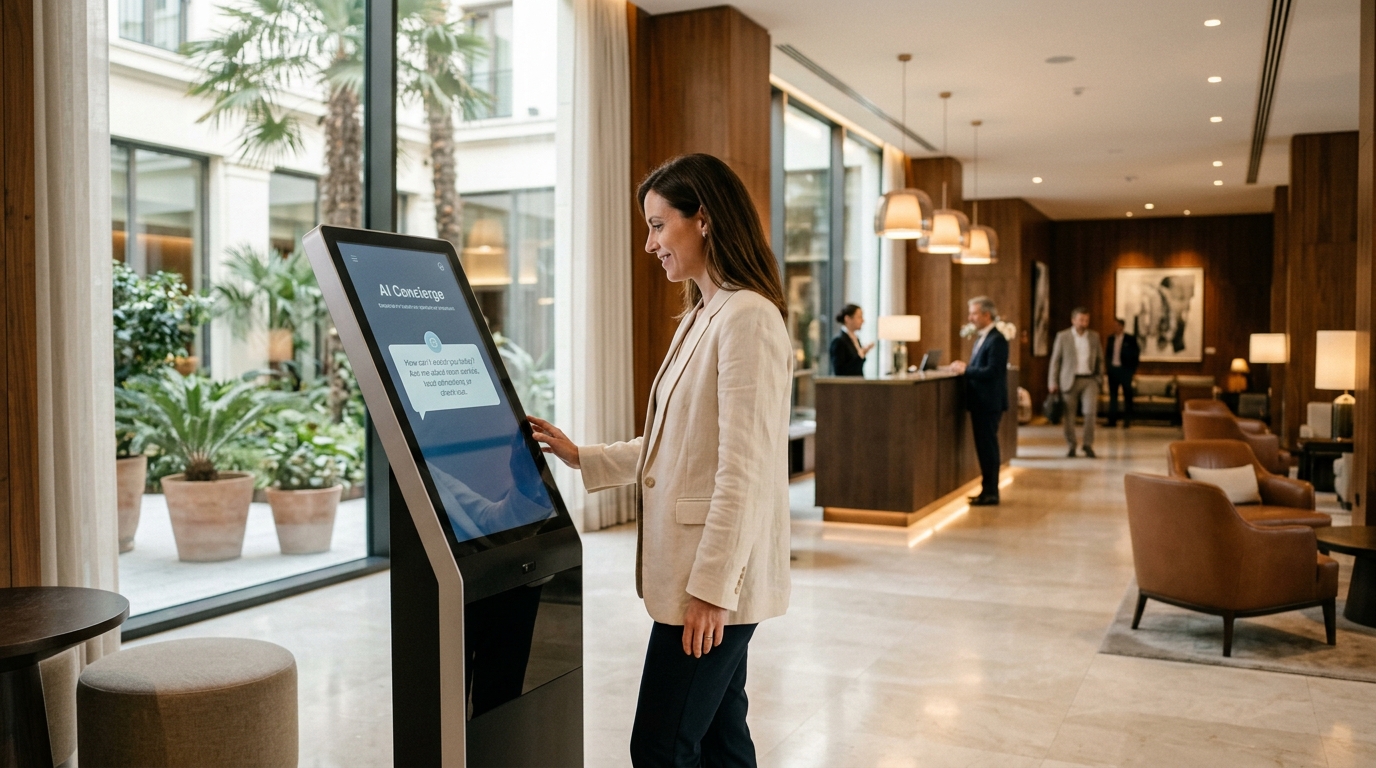
Check-in remains one of the highest-friction points in the guest journey. A 20-minute queue on arrival, after a long flight, shapes the first impression and drags NPS down before the guest has even set foot in their room.
The real problem behind reception queues
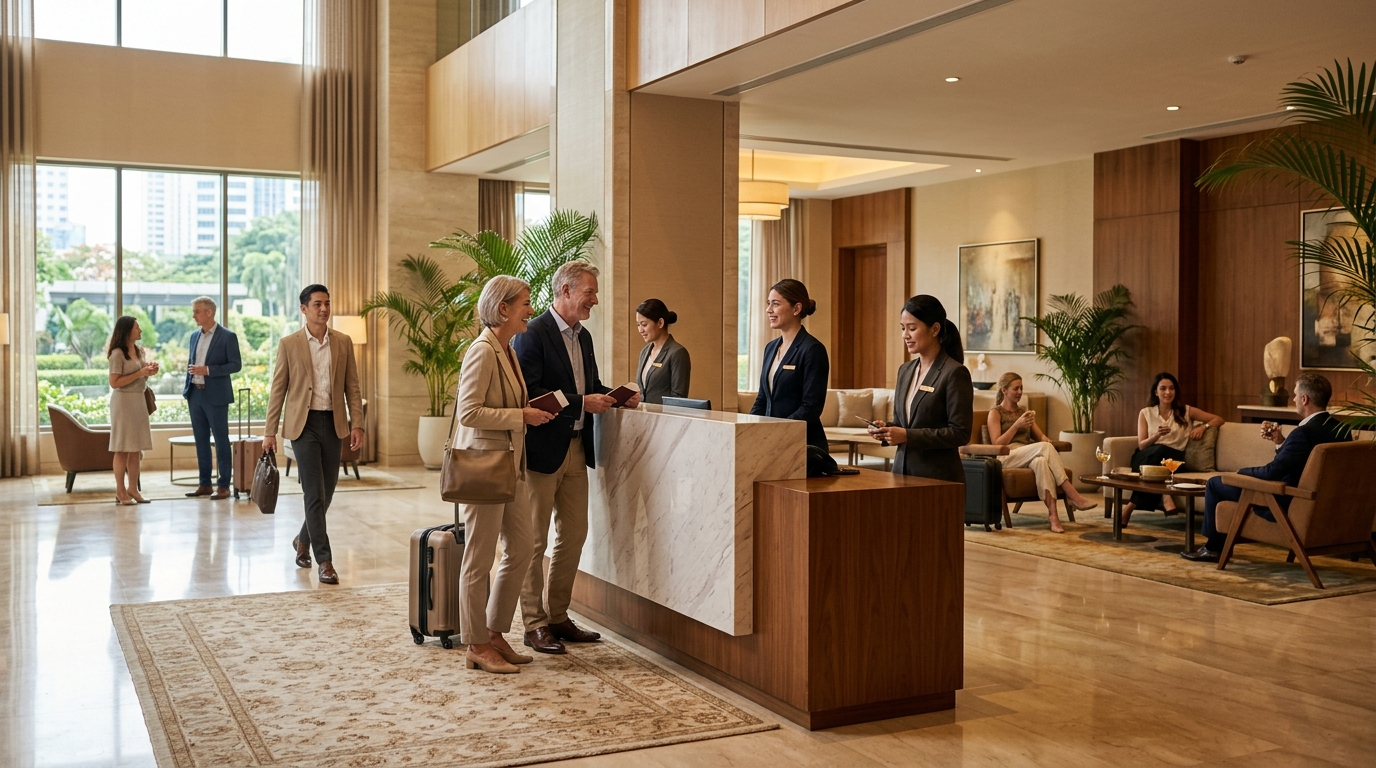
The front desk of a high-volume hotel — a leisure resort, an urban property with more than 150 rooms, a conference hotel — handles arrival peaks that are structurally difficult to smooth out with staffing alone. Sunday afternoons, charter-flight departure days, the start of the week at business hotels: all of them generate queues that the team cannot absorb, no matter how much the desk is reinforced.
The bottleneck is not always the speed of the receptionist. It’s the volume of steps that must be completed at that moment: verifying identity, collecting a signature on terms and conditions, taking a deposit, explaining hotel services, assigning a room, handing over keys. Each of those steps makes sense, but completing all of them at the desk, with the guest standing and their luggage beside them, is inefficient for both parties.
The impact on metrics is direct. Satisfaction surveys consistently place the arrival process among the worst-rated items in hotels that have not digitalised this flow. And since check-in is the guest’s first physical contact with the property, its rating pulls everything else down with it: internal studies from chains that have optimised this step show improvements of several NPS points across the board, not just in the reception item.
Nor is this a problem exclusive to the guest experience. Every minute a receptionist spends on repeatable administrative tasks — collecting data already available in the PMS, printing forms, filling in fields manually — is time not spent on upselling, personalised attention or resolving incidents.
The right approach to online pre-check-in in hotels
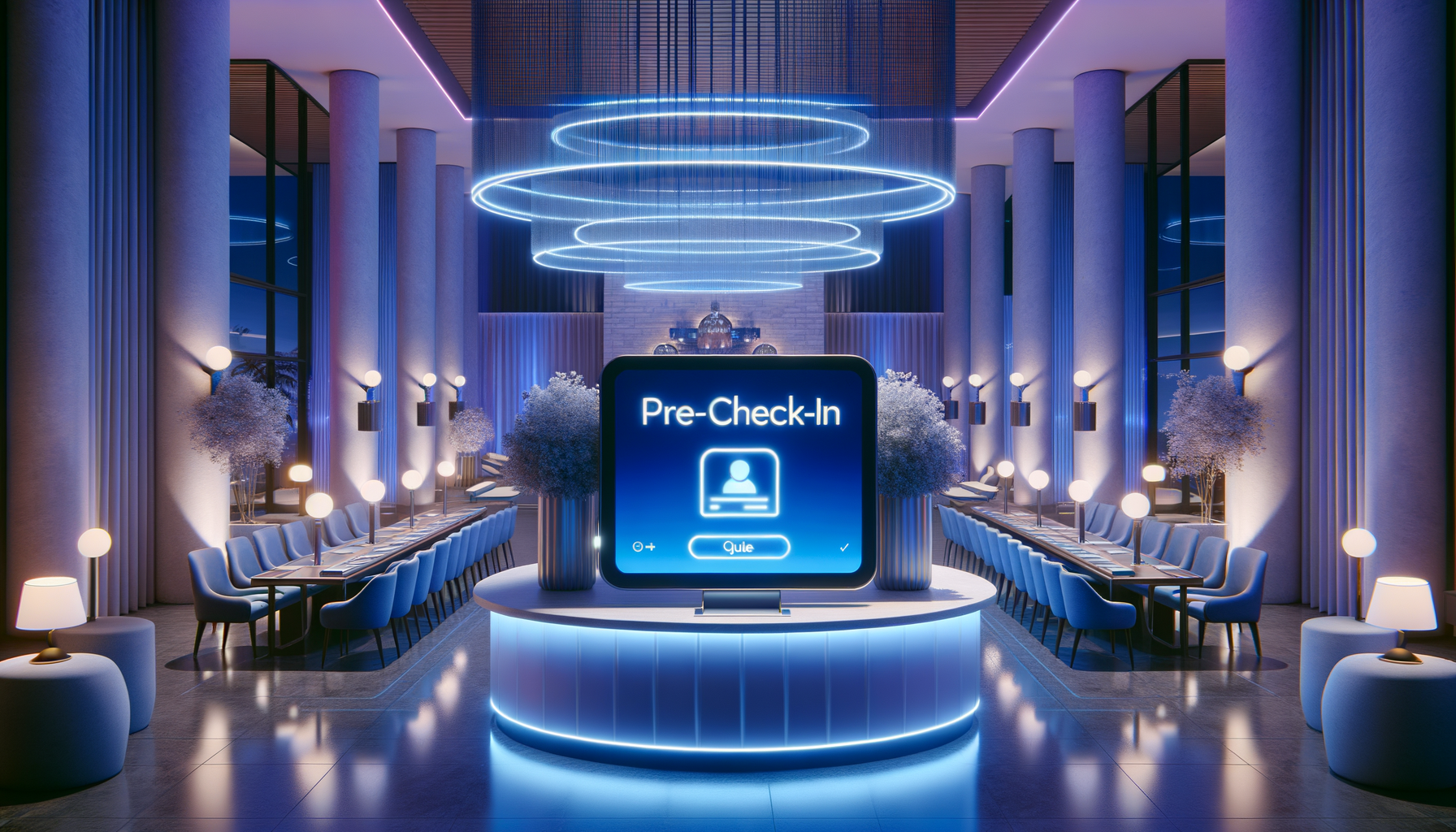
The solution is not to transfer the problem to the guest by asking them to fill in an endless form on their phone. A well-implemented online hotel pre-check-in distributes the process across the days leading up to arrival, reducing what happens at the desk to the strictly necessary.
The efficient flow works like this: between 24 and 72 hours before arrival, the guest receives a personalised link. Through that link they complete the legally required documentation (personal details, a copy of their identity document), sign the accommodation conditions, select room preferences if the hotel allows it, and can review the services available during their stay. All on their own device, with nothing to install.
When they arrive at the hotel, the physical check-in becomes an identity verification and key handover. In properties with app-based or code-based access, not even that. In others, the time spent at reception drops significantly.
Three elements determine whether this process works or becomes just another form no one finishes filling in. First, the open rate of the message: it must arrive via the right channel (email and SMS perform better than push notifications for users who have not yet interacted with the app) and at the right time. Second, the friction of the form: fewer fields, smart validation and automatic progress saving. Third, integration with the PMS: if the pre-check-in data does not reach the management system in real time, the receptionist has to ask for it again, and the process loses all its value.
How to apply it in practice
Implementing an online hotel pre-check-in that actually reduces queues and moves the NPS requires concrete operational decisions, not just switching on a module.
Define what you move to pre-check-in and what you don’t. Not everything needs to be resolved before arrival. The final identity verification, for example, must happen in person in most destinations due to legal requirements. What you can move ahead: collection of personal data, signing of conditions, authorisation of charges, selection of room preferences (view, floor, double or twin), and an initial presentation of ancillary services (spa, restaurant, excursions) that can generate additional revenue before the guest even arrives.
Establish a communication cadence that doesn’t feel intrusive. One message at 72 hours, a reminder at 24 if they haven’t completed the process. More messages do not improve conversion rates; they reduce them. The subject line of the email matters: a reference to “speeding up your arrival” converts better than generic welcome messages.
Use pre-check-in as the first upselling touchpoint. The moment a guest is planning their trip — and that includes the 48-72 hours before arrival — is when they are most receptive to offers for room upgrades, spa packages or restaurant reservations. It is an ancillary revenue channel that many hotels leave unactivated. With Hoteligy, the Online Pre-Check-in module allows these proposals to be included within the same form flow, without redirecting the guest to another platform.
Measure the impact specifically. Not just overall NPS: review the check-in item in your surveys separately, measure average reception time before and after, and cross the data with the pre-check-in completion rate. This allows you to adjust the cadence, the form content and the upselling moments with real data.
Train the reception team for the new flow. The most common change is internal resistance. The receptionist who has been doing check-in a certain way for years needs to understand that pre-check-in doesn’t eliminate their job: it shifts it towards higher-value tasks. If the digital process works, they spend more time on conversation, in-person upselling and problem resolution, which is where they generate the most impact on the experience.
Consider integration with the rest of the digital journey. Online pre-check-in is the guest’s first interaction with the hotel’s digital platform. If from that very moment they can also access the Guest WebApp, book at the restaurant or browse resort services, digital adoption during the stay increases naturally. The opposite — an isolated pre-check-in with no continuity — wastes the momentum of that first contact.
Conclusion
Online hotel pre-check-in is not a cosmetic feature. It is an operational change that redistributes workload, reduces friction at the moment of highest emotional exposure for the guest, and opens an ancillary revenue channel that would otherwise arrive too late. Hotels that have correctly integrated it into their operations report measurable improvements both in check-in times and in the arrival rating within their satisfaction surveys. The starting point is to decide which steps of the current process absolutely must happen at the desk, and which can — and should — be resolved beforehand.
Want to see how the Online Pre-Check-in module works applied to your operation? Request a demo at hoteligy.com/demo and we’ll review it with your team.