Occupancy is at its peak and ADR is right where you left it in the forecast, but GOP just won’t budge. The problem isn’t always how many guests come through the door — it’s how much each one spends once they’re inside. That’s exactly where hotel upselling makes the difference.
The guest is already at the hotel — and that changes everything
By the time a guest arrives at the front desk, the moment to “sell” them a room has already passed. What lies ahead are two, three, seven nights to generate additional revenue at the spa, restaurants, activities, room service, or any other revenue touchpoint on the property.
The metric that measures this precisely is TRevPAR — Total Revenue Per Available Room — and it’s the one that best reflects the true health of a resort or a hotel with a broad service offering. A solid RevPAR with a flat TRevPAR is a clear signal that guest spending on-property is below its potential.
Traditional upselling relies heavily on the proactiveness of front desk staff and point-of-sale teams. This leads to inconsistent results: some receptionists sell naturally while others avoid the conversation entirely. Daily operations, peak workloads, and staff turnover make that model difficult to scale.
The alternative isn’t to remove the team from the process — it’s to complement them with digital channels that work continuously, regardless of the shift or the individual employee. Effective hotel upselling combines human interaction with active digital touchpoints throughout the entire stay.
From intention to revenue: what it takes to make it work
The first requirement is visibility. If a guest doesn’t know the spa has availability this afternoon, they won’t book it. If they don’t see there’s a wine-pairing dinner on Thursday, they won’t ask for it. It seems obvious, but the reality in many hotels is that this information sits in a printed leaflet inside the room that nobody reads, or on a hallway poster that goes unnoticed.
The second requirement is minimal friction. The more steps a guest needs to complete a booking or an order, the lower the conversion. An experience that requires calling reception, waiting, explaining what they want, and confirming availability will lose every time to any option that resolves the same thing in two taps.
The third element is timing personalisation. Offering a massage to someone who just arrived after a long flight is very different from offering one to someone on their third day of vacation. The offer needs to be relevant to the context of the stay — not a generic message sent to everyone at the same time.
When these three factors align — visibility, low friction, and the right moment — ancillary revenue grows in a consistent and measurable way, not in isolated spikes.
How to apply hotel upselling in practice
Activate the digital channel during the stay, not just before. Online pre check-in is useful for gathering preferences and offering room upgrades, but the bulk of upselling happens during the days the guest spends at the hotel. A Guest WebApp accessible from any device — no download required — allows you to display all services in real time, with live availability and direct booking. Hoteligy’s Marketing In-Stay module lets you configure segmented communications and offers based on the guest’s stage in their stay or their profile.
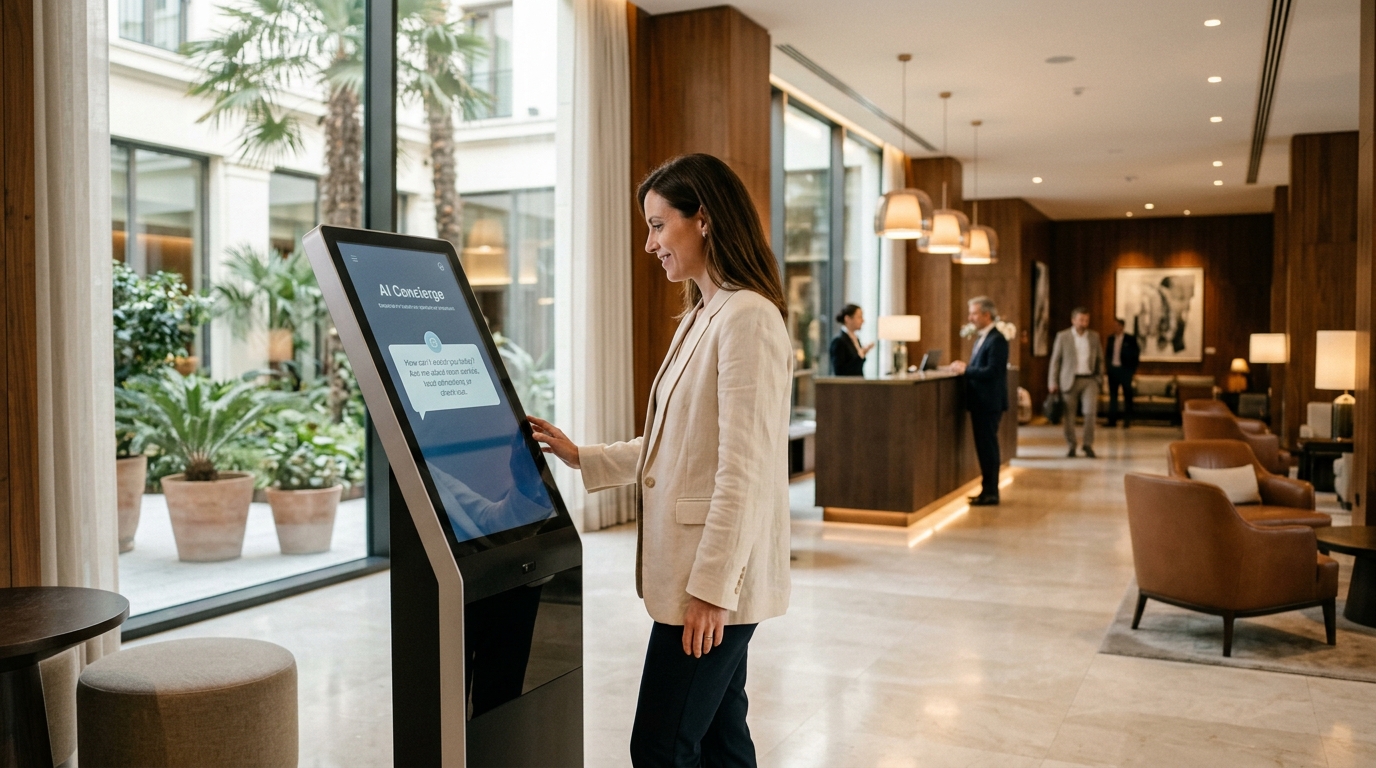
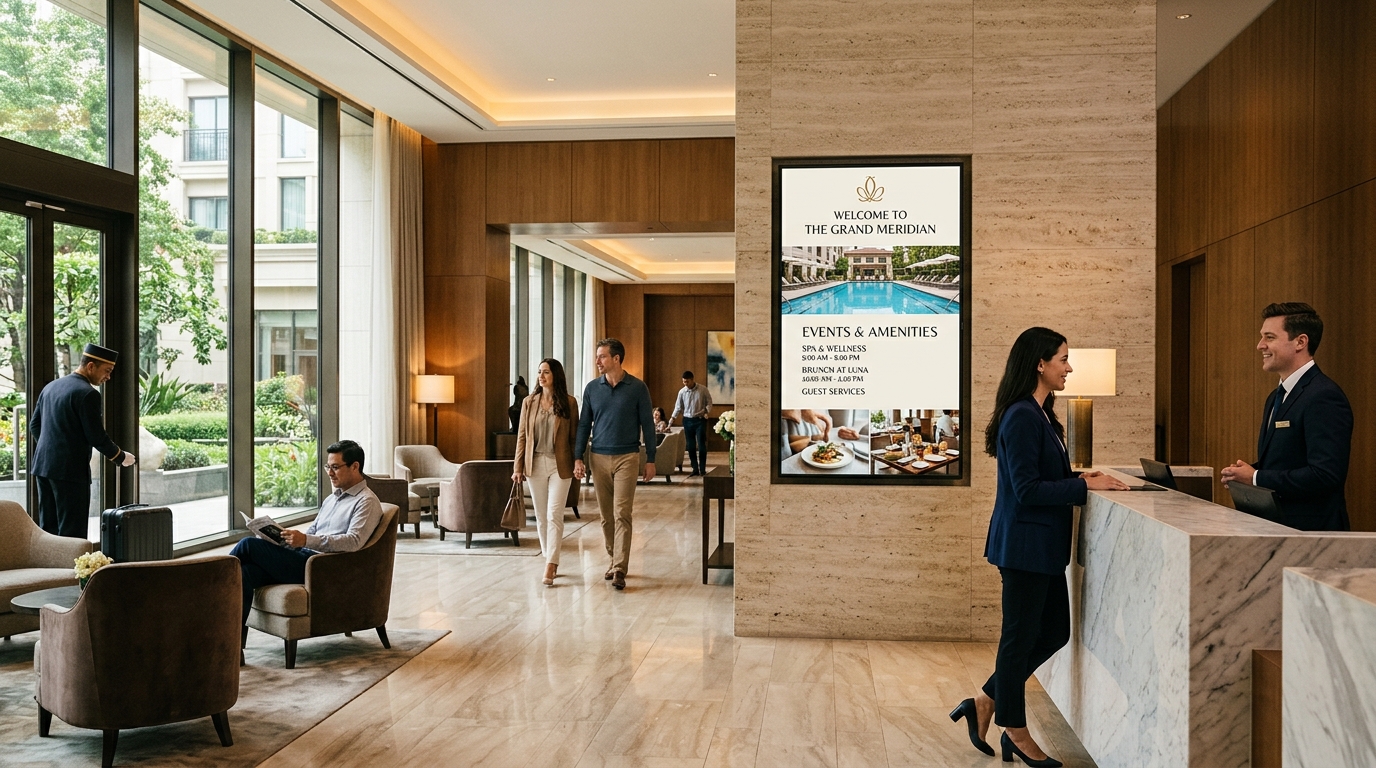
Use physical touchpoints as digital triggers. Interactive kiosks in high-traffic areas — lobby, pool, spa entrance — capture attention at transit moments and can redirect to a booking in seconds. Digital Signage on strategic screens serves the same visibility function without requiring the guest to proactively search for information.
Integrate service bookings into a single flow. If a guest can book a restaurant, a spa treatment, and an excursion from the same digital environment, the likelihood of completing more than one booking in the same session increases significantly. The Restaurant Booking, Spa Management, and Excursions & Activities modules work in a coordinated way within the platform, making that unified experience possible.
Don’t leave room service out of the equation. QR-based digital ordering in rooms or common areas reduces the friction of calling and improves average ticket value because guests browse a complete menu with images and descriptions, rather than ordering from memory based on what they recall from the printed menu.
Measure by channel and by segment. Well-executed hotel upselling generates data: which services are purchased most, at what point in the stay, from which device or touchpoint. That information allows you to adjust the offer, change the timing of communications, and understand which segments have the highest propensity for additional spend. Without that analytics layer, any action is a shot in the dark.
Train your team to reinforce, not replace. The digital channel captures passive demand — guests who wouldn’t have asked on their own initiative. Staff remain key for active demand: the conversation at reception, the waiter’s recommendation, the therapist who mentions a complementary treatment. Both legs are necessary.
Conclusion
Hotel upselling is not a one-off tactic for low seasons — it’s a structural lever for improving TRevPAR regardless of occupancy. Hotels that do it well don’t necessarily have more guests; they have guests who spend more because the service offer reaches them at the right moment, with just enough ease to make them act. Technology doesn’t replace hospitality, but it does remove the invisible barriers that prevent spending from materialising.
Want to see how it works in practice? Request a personalised demo at hoteligy.com/demo and explore which modules best fit your property’s service structure.