The 2026 guest arrives at the hotel with expectations shaped by Amazon, Netflix, and Uber. They want immediacy, personalization, and zero friction. Hotel innovations are no longer an optional differentiator: they are the minimum standard to maintain RevPAR and NPS.
In this article, we review what “hotel innovation” means today, which technologies are making a difference this year, and how to apply them without skyrocketing CapEx or overwhelming the operations team.
What we mean by hotel innovations in 2026
The term hotel innovations encompasses the set of technologies, processes, and operational models that enhance the guest experience and/or hotel efficiency. It is not limited to hardware: it includes software, data, AI, automation, and workflow redesign.
In 2026, relevant innovations share three characteristics:
- Frictionless: guests don’t download apps, fill out long forms, or wait in lines.
- Connected: data flows between PMS, POS, CRM, and digital touchpoints without silos.
- Measurable: every action translates into clear KPIs (ancillary revenue, NPS, average response time).
Leading market chains—Radisson, H10, Iberostar, Princess—no longer talk about isolated “digitization projects,” but about unified digital ecosystems managed from a single CMS.
The problem: technological fragmentation
Most hotels have accumulated tools over the last decade. One app for restaurant reservations, another for the spa, a separate chatbot, screens with content managed by an external agency, surveys on a third platform…
The result is well-known:
- Guests receive inconsistent experiences depending on the touchpoint.
- The marketing team wastes hours duplicating content.
- Data doesn’t cross-reference: impossible to know if the customer who booked dinner also visited the spa.
- Total cost of ownership skyrockets with overlapping licenses.
Real innovation in 2026 is not about adding more technology, but about unifying it under one umbrella. This is where a 360 CMS like Hoteligy’s fits in: a single panel from which content is published, reservations are managed, and metrics are analyzed across all channels.
Innovations that are moving the needle
1. Download-free Guest WebApp
The main barrier of the “hotel app” model has always been the friction of installation. In 2026, the standard is the progressive WebApp: guests scan a QR code in the room and access all services from their browser.
Hoteligy’s Guest WebApp allows guests to view the menu, book a restaurant, order room service, request towels, or report an incident without installing anything. Typical adoption rate: 60-80% of guests during their stay.
2. 24/7 Conversational AI
The AI chatbot is no longer a rigid decision tree. Current generative models respond in the guest’s language, check real-time availability, and escalate to a human only when necessary.
Measurable impact: 40-60% reduction in calls to reception for basic inquiries (hours, locations, included services).
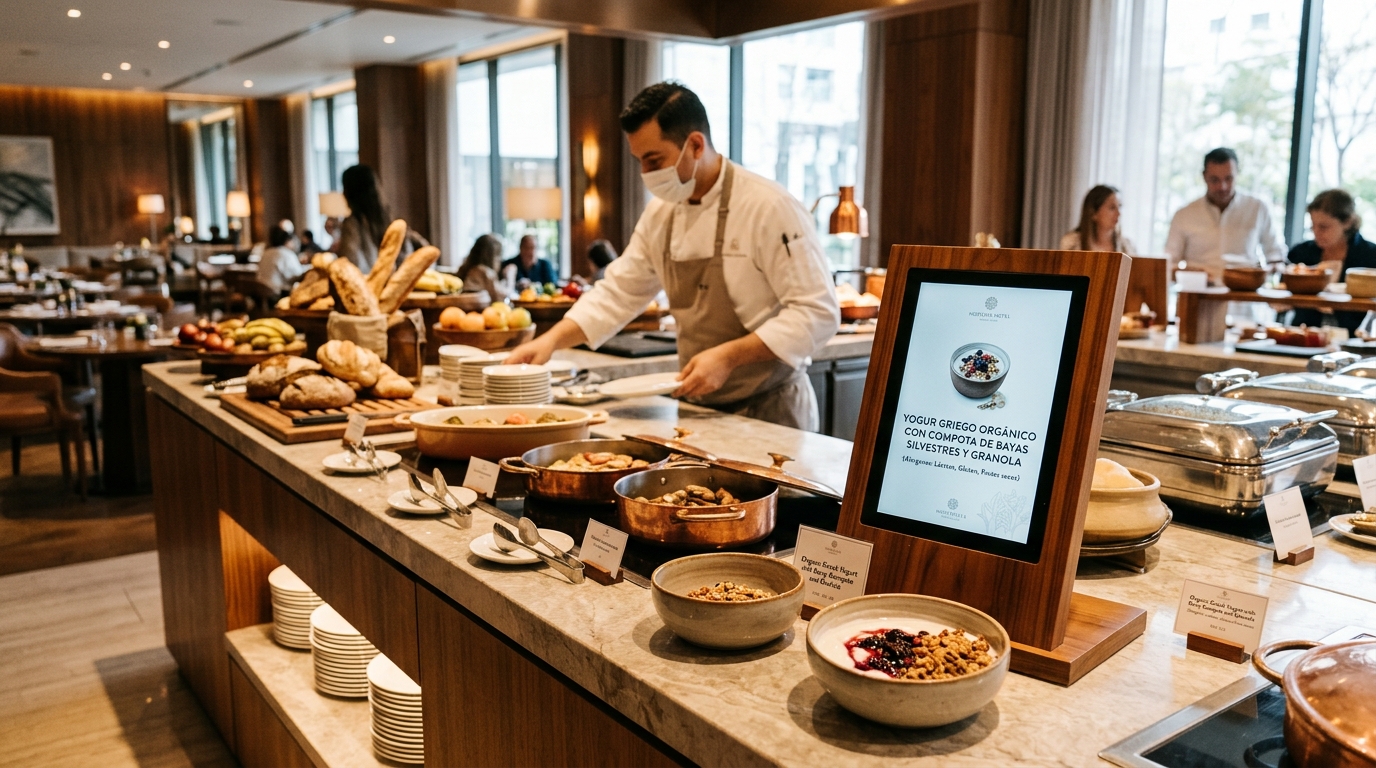
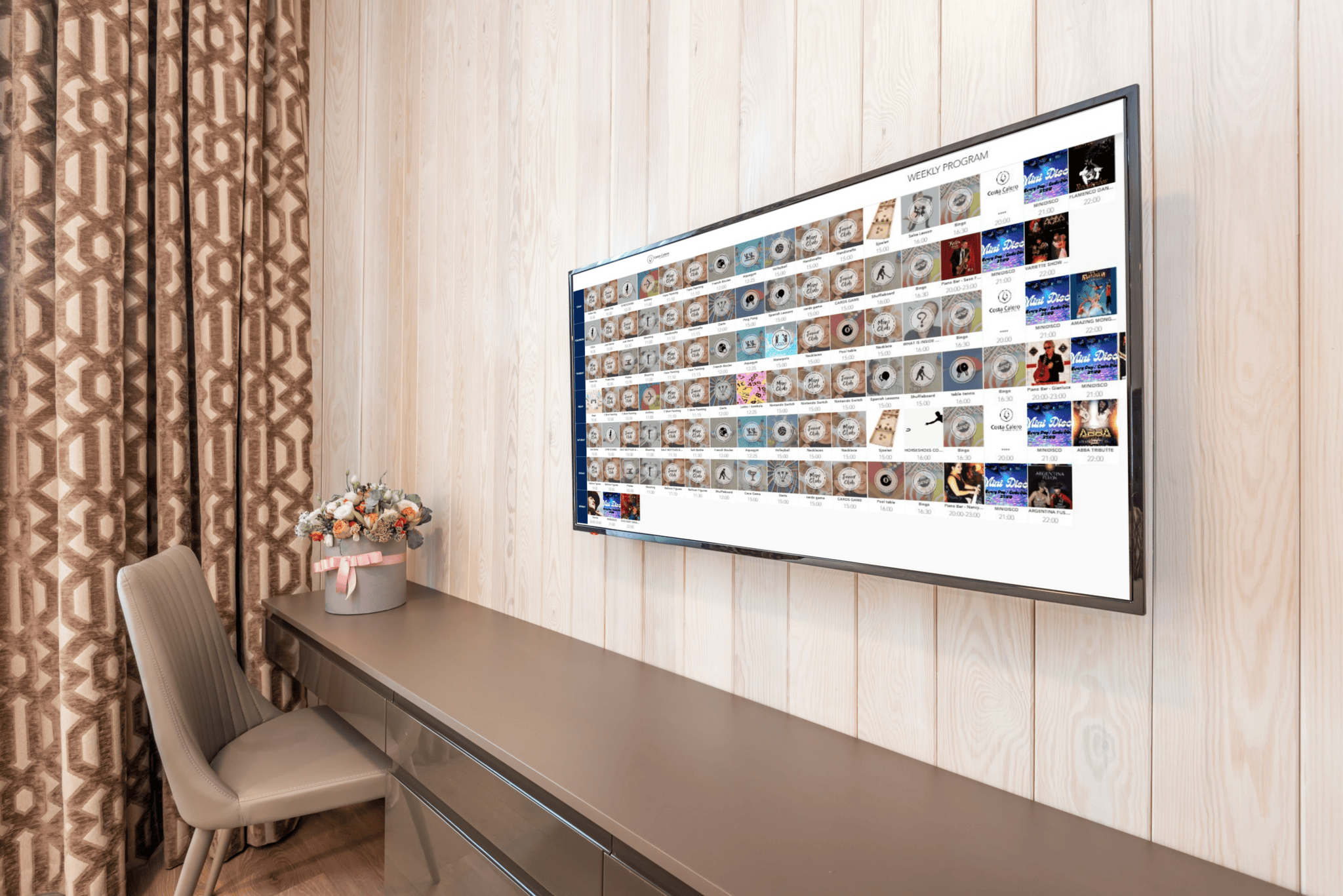
3. Dynamic Digital Signage
Static screens with PowerPoint are history. Modern Digital Signage displays contextual content: tonight’s show schedule, the current buffet menu, spa offers with available slots in the next hour.
When used well, it’s a passive upselling tool that generates ancillary revenue without effort from the team.
4. Smart TV as a room hub
The television remains the most used device in the room. The Smart TV App turns the TV into a sales and service point: room service, surveys, service information, Netflix casting with the guest’s account.
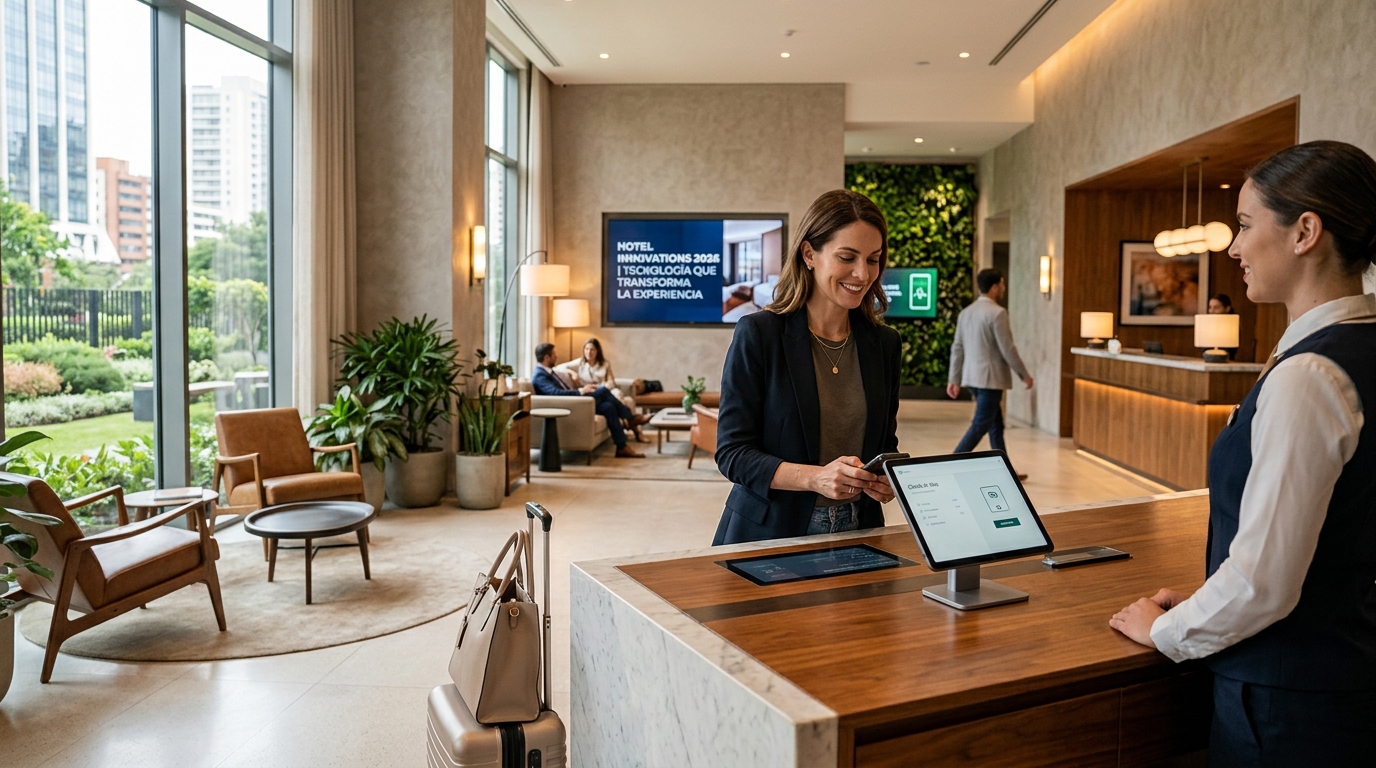
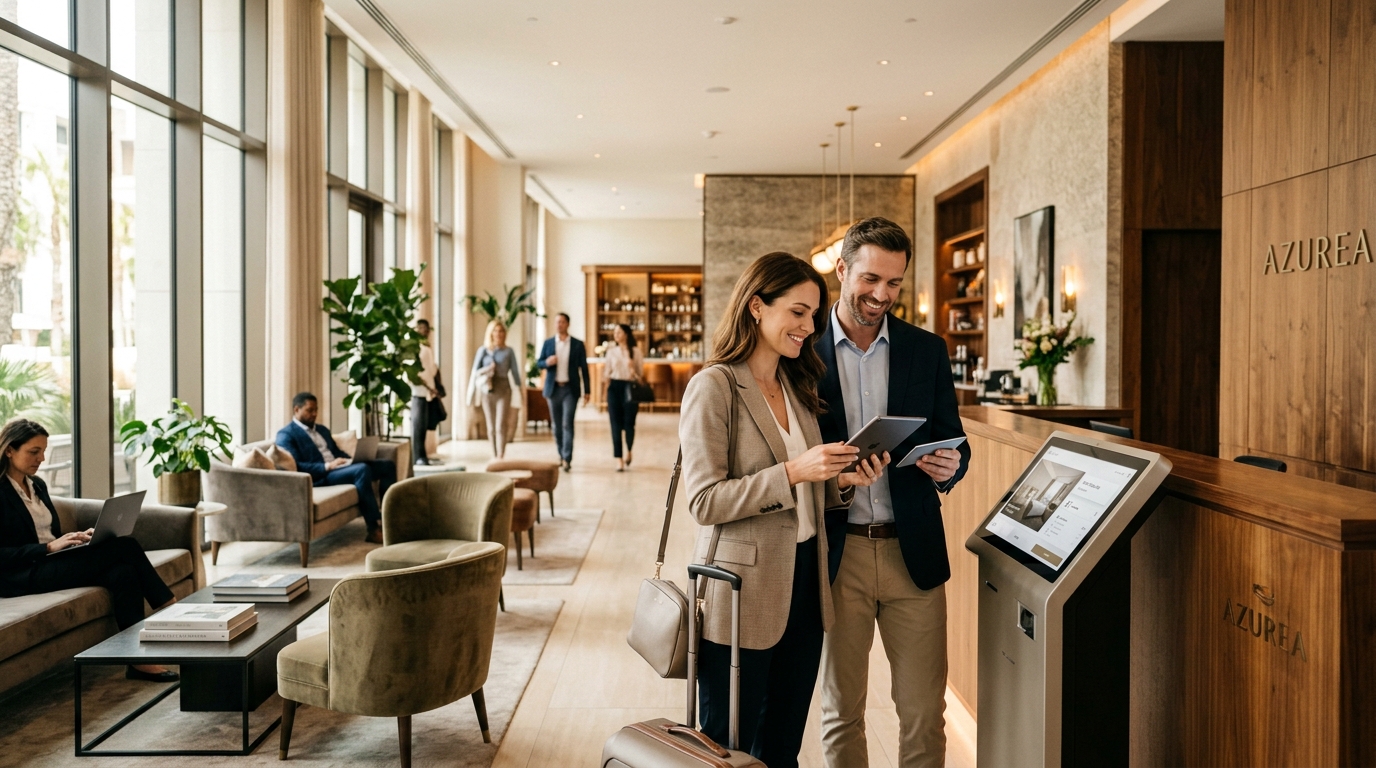
5. PreCheck-in and queue elimination
Online PreCheck-in reduces average reception time from 8-12 minutes to less than 2. Guests arrive, validate identity, and receive their key. The reception team frees up time for valuable conversations (upgrades, recommendations, loyalty).
6. Segmented In-Stay Marketing
Sending the same offer to all guests is inefficient. Modern in-stay marketing platforms segment by profile (families, couples, business), day of stay, and previous behavior, multiplying the conversion rate of F&B, spa, and excursion offers.
How to apply these innovations without dying trying
Three practical principles for hotel directors planning their 2026 roadmap:
1. Start with the touchpoint with the highest ROI. Don’t try to deploy everything at once. In most resort hotels, the WebApp is the starting point with the best cost/impact ratio because it centralizes internal bookings, requests, and upselling.
2. Unify before adding. Before contracting a new tool, audit existing ones. If your CMS can manage signage, WebApp, and TV with a single interface, you avoid duplicating costs and training.
3. Measure from day one. Define KPIs before deployment: WebApp adoption rate, increase in ancillary revenue per occupied room, reduction in calls to reception, NPS evolution. Without metrics, no innovation can be defended to management.
Frequently Asked Questions
How much does it cost to digitize a 200-room hotel? It depends on the scope, but a unified ecosystem (WebApp + signage + chatbot + operational modules) usually has a payback of 6-12 months via ancillary revenue and operational savings.
Do I need to replace my current PMS? No. Modern platforms integrate via API with major PMSs (Opera, Protel, Sihot, etc.). You can check the available integrations.
What about older guests who don’t use technology? The correct design always includes an analog option. Technology expands channels; it doesn’t replace them.
Conclusion
Hotel innovations in 2026 are not about adding gadgets, but about designing coherent digital experiences on a unified technological foundation. The hotels that win are not those with the most tools, but those with the right ones, well-integrated and oriented towards clear metrics.
If you want to see how chains like Radisson or H10 are applying this approach, you can explore real client cases or request a personalized demonstration for your hotel.
Ready to design your hotel’s innovation roadmap? Request a demo at hoteligy.com/demo and we’ll show you how to unify all your digital touchpoints on a single platform.