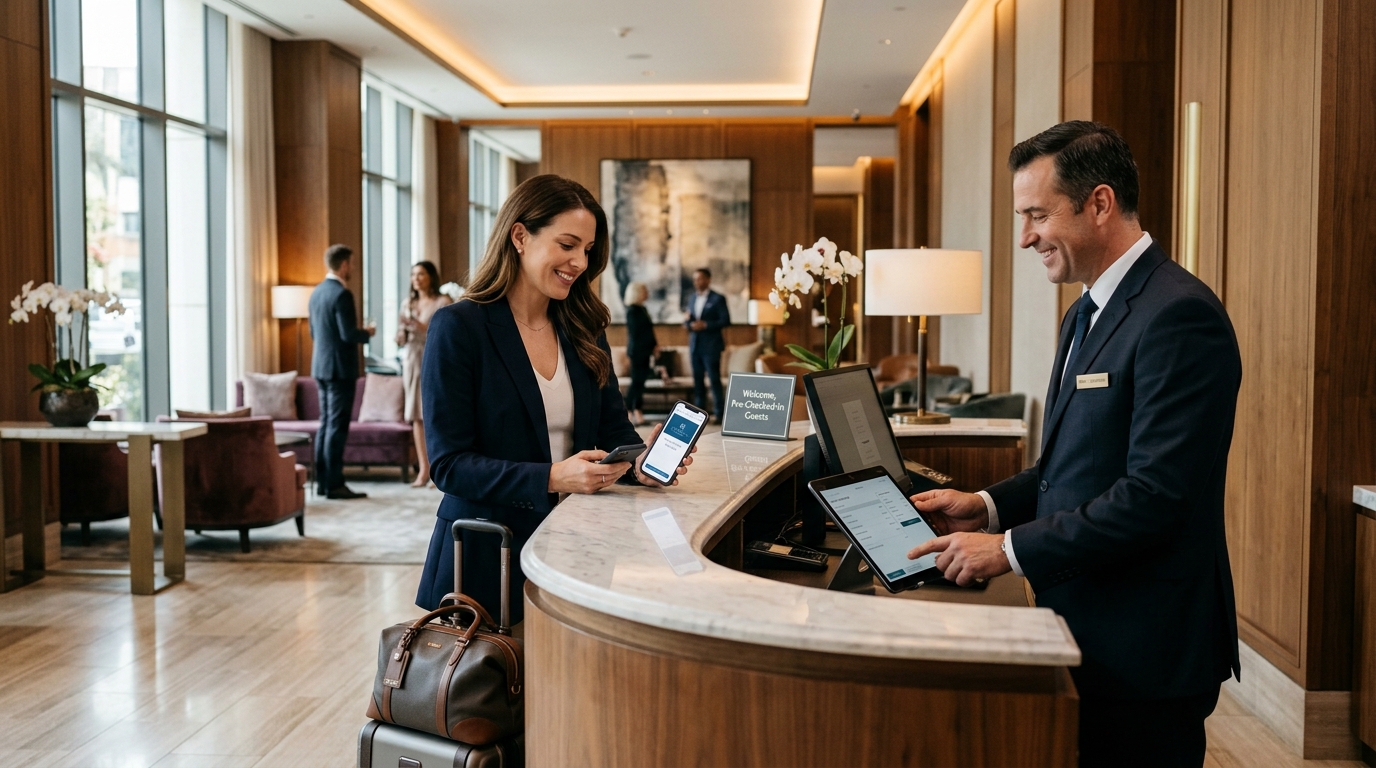
Traditional check-in remains the biggest operational bottleneck at the front desk: 8-12 minutes per guest, queues at 3:00 PM, and an overwhelmed team just as the guest experience begins. Online pre-check-in solves this problem, but only if the flow is well-designed and connected to the PMS.
This guide is for hoteliers who are already familiar with the concept and need to take it to the next level: measuring its real impact, optimizing conversion, and turning it into a lever for ancillary revenue.
Why Pre-Check-in is No Longer Optional
After several years of accelerated adoption, online pre-check-in is no longer a trend—it’s an operational requirement. Guests expect to complete formalities before arriving at the hotel, just as they do with airlines and mobility services.
The problem is that many hotels have implemented pre-check-in, but with completion rates below 40%. This means the front desk team is still manually processing most arrivals, and the module’s ROI is marginal.
Hotels with a well-designed flow typically exceed 65-75% adoption. The difference between these two scenarios isn’t the software; it’s the process design, the timing of the communication, and the integration with the rest of the digital stack.
What a Modern Pre-Check-in Flow Should Include
An effective online pre-check-in is not just a form for passport details. It’s a pre-arrival process structured in several blocks.
Legal and identification data collection. Document scanning, digital signature, guest registration (automatic submission to authorities depending on the country), and age verification. Without this, the guest still has to stop by the front desk.
Stay personalization. Estimated time of arrival, room preferences (floor, view, pillow type), reason for travel, special celebrations. This data feeds both the PMS and the CRM.
Pre-arrival upselling. Room upgrades, late check-out, parking, airport transfers, welcome packages. This is the block that turns pre-check-in into a revenue tool, not just an efficiency tool.
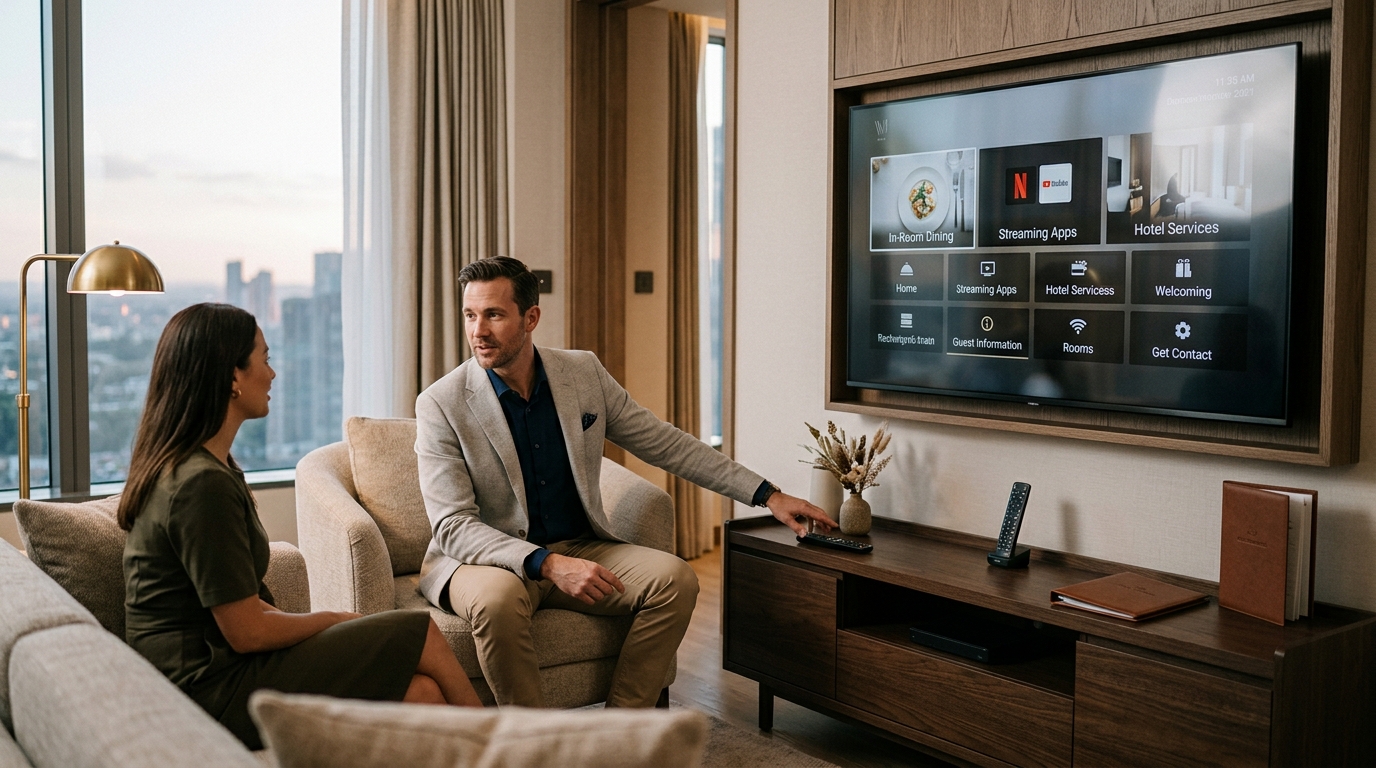
Digital onboarding. Access to the Guest WebApp, practical hotel information, schedules, maps, and the ability to book a restaurant or spa before arrival.
Hoteligy’s Online Pre-Check-in module covers these four blocks in a single flow, configurable by hotel type (urban, resort, MICE) and connected to the PMS in real time.
Concrete Data: What to Expect When Optimizing the Flow
When a hotel switches from a basic pre-check-in to a well-designed one, these are the KPIs that move:
- Average time at the front desk: from 8-12 minutes to 2-3 minutes per digitalized arrival.
- Pre-check-in completion rate: from 35-45% to 65-80% with email + WhatsApp and a 24-hour reminder.
- Room upgrade conversion: between 4% and 9% of total reservations with completed pre-check-in.
- Ancillary revenue per guest: an average increase of €8-€15 in urban hotels and €18-€30 in holiday resorts.
- Arrival NPS: an increase of 6-12 points by eliminating front desk queues.
These ranges vary by segment, booking channel, and source market, but they are consistent across hotels that have implemented the flow with data connected to the PMS and housekeeping operations.
How to Apply It: 5 Key Operational Decisions
1. Communication Timing
The most common mistake is sending the pre-check-in 7 days before arrival. The open rate is high, but the completion rate is low because the guest hasn’t finalized their arrival time or preferences yet.
The optimal timing is 72 hours before for the first message and 24 hours before for a reminder, combining email and WhatsApp. For last-minute bookings (less than 48 hours), send it immediately after confirmation.
2. Communication Channel
Email alone doesn’t work. Open rates in the hotel industry are around 35-40%, and the completion rate for the entire process drops to 15-20%.
Combining email + WhatsApp (or SMS in markets where WhatsApp is not dominant) doubles the conversion rate. If the guest booked direct, they can also be notified through the hotel’s branded app.
3. PMS Integration
A pre-check-in that doesn’t automatically write to the PMS is just a form that creates manual work for the front desk. Make sure the module:
- Updates guest data in real time.
- Blocks the assigned room based on preferences.
- Notifies housekeeping of an early ETA.
- Automatically syncs upsells with the guest’s folio.
Hoteligy maintains native integrations with major PMSs (Opera, Protel, Mews, Sihot, etc.), which avoids custom development.
4. Upselling Design
Don’t offer 15 products. Three well-segmented offers convert better than a full catalog. The recommended logic is:
- Room upgrade: dynamic, based on real-time availability and pricing.
- High-margin service: parking, late check-out, transfer.
- Differentiating experience: dinner at a specialty restaurant, spa circuit, family activity.
Upsells must be connected to the real-time inventory of the restaurant booking and spa management modules to avoid overbooking services.
5. Hotel Arrival: Closing the Loop
If a guest completes the pre-check-in but has to queue again upon arrival, the whole process becomes pointless. Define a clear flow for digitalized arrivals:
- An express counter or dedicated kiosk.
- Key/card delivery in under 60 seconds.
- Direct room access with a digital key if the infrastructure allows it.
Signage at the front desk using Digital Signage helps direct the flow and clearly communicates that guests who have completed pre-check-in have priority.
KPIs You Should Monitor Monthly
A pre-check-in process without measurement degrades over time. We recommend a monthly dashboard with these indicators:
- Send rate for eligible reservations (target: >95%).
- Open rate by channel (email vs. WhatsApp).
- Full flow completion rate.
- Average processing time at the front desk for arrivals with pre-check-in vs. without.
- Incremental revenue from pre-arrival upsells.
- Upsell conversion by offer type.
- NPS specific to the arrival moment.
If any of these KPIs deviate, a specific point in the flow needs adjustment, not a complete overhaul.
Common Mistakes That Limit ROI
Asking for too much data. Each extra field reduces conversion by around 5-8%. Only ask for what is legally required and what provides operational value.
Poorly translating the flow. In holiday hotels with mixed source markets (UK, DE, NL, FR), a bad translation destroys conversion. A minimum of five professional translations is essential.
Ignoring OTAs. Bookings from Booking.com or Expedia should also receive the pre-check-in. If you only enable it for direct bookings, you’re leaving out 50-70% of your arrivals.
Not updating offers. A static upsell quickly loses its effectiveness. Review prices and offers every 30-45 days.
Conclusion
Online pre-check-in is no longer just an efficiency improvement: it’s the first significant digital interaction with your guest and the first point of ancillary revenue generation before arrival. When optimized correctly, it frees up front desk hours, increases NPS, and contributes incremental revenue directly to the bottom line.
The difference between a module that works and one that doesn’t lies in the flow design, timing, channels, and real integration with the PMS and the rest of the hotel’s digital stack.
If you already have pre-check-in but aren’t achieving the KPIs mentioned in this article, the problem probably isn’t the tool itself, but the need to redesign the process with a partner who understands hotel operations.
Want to see how this would work in your hotel? Request a personalized demo of Hoteligy’s Online Pre-Check-in module, and we’ll review your flow, friction points, and expected ROI with you: https://hoteligy.com/demo