Hotel screens have been there for years, but few properties get any real value out of them. They display the logo, breakfast hours and little else. Meanwhile, guests walk past them several times a day without receiving any relevant prompt to book at the spa, have dinner at the restaurant or take up an upselling offer.
The real problem with digital screens in most hotels
Digital signage in hotels has a management problem, not a technology problem. Operations teams typically inherit disconnected systems: a screen at reception that relies on a local computer, another in the lobby managed through a user account nobody remembers, and restaurant monitors running last year’s PowerPoint on a loop.
The result is outdated content, inconsistent messaging and a systematically missed opportunity. If a guest arrives at the hotel and the first screen they see shows an expired promotion or an activity that no longer exists, the message they receive is the opposite of what you are trying to convey.
From a TRevPAR perspective, digital screens are one of the highest-potential channels for activating ancillary revenue because they reach guests at the precise moment they are already inside the property. Purchase intent in that context is far higher than in any pre-check-in communication.
The problem is not a lack of screens. Most four- and five-star hotels already have the infrastructure. What is missing is a centralised management layer that makes it possible to publish relevant content at the right time, segment by hotel zone and measure which messages actually drive conversion. Without that layer, digital signage becomes expensive decoration.
What a well-configured digital signage system should do
A useful digital signage system for hotels solves three things: centralised content management, location-based segmentation and synchronisation with hotel operations.
Centralised management means the marketing or management team can update all screens from a single panel, without relying on technical support or physically accessing each device. When spa hours change or a last-minute promotion goes out to fill restaurant tables, the response time has to be immediate.
Location-based segmentation is equally critical. The content that makes sense at the spa entrance is not the same as what works by the pool area or in the bedroom corridors. A guest who has just left the gym has a different mindset from one waiting for the lift with their luggage. The system must allow different content to be scheduled for each screen or group of screens without friction.
Synchronisation with hotel operations is the third factor. If the restaurant has availability at lunchtime, the system should be able to display that message on lobby screens in real time. If a children’s club activity has spare places, it should appear in family traffic areas.
Hoteligy’s Digital Signage module lets you manage all these scenarios from the same CMS that controls the rest of the hotel’s digital touchpoints, eliminating the need to work with parallel systems and keeping the message consistent across all channels.
How to apply digital signage in hotels in practice
Effective implementation starts by defining what objective each screen serves before thinking about content. A screen at reception is a different tool from one in the dining area or in the spa treatment corridor.
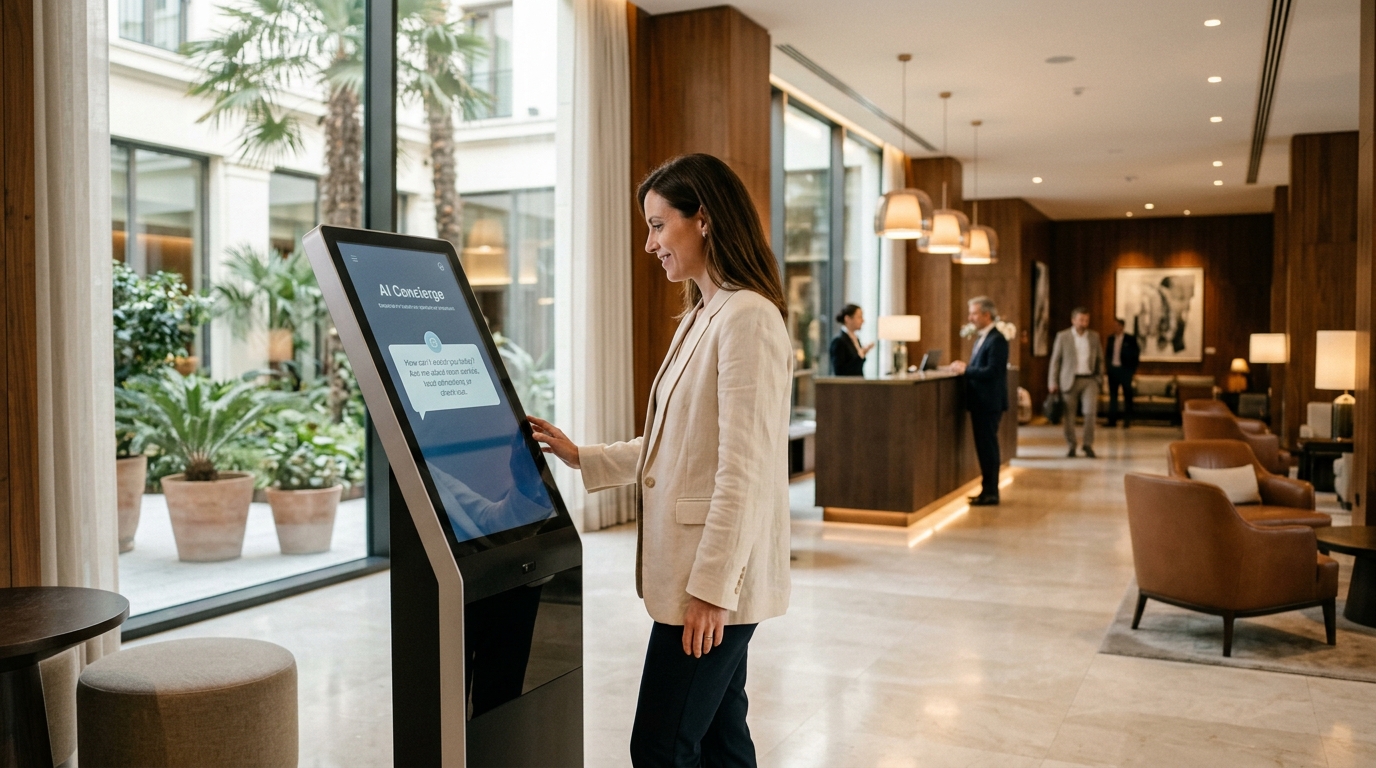
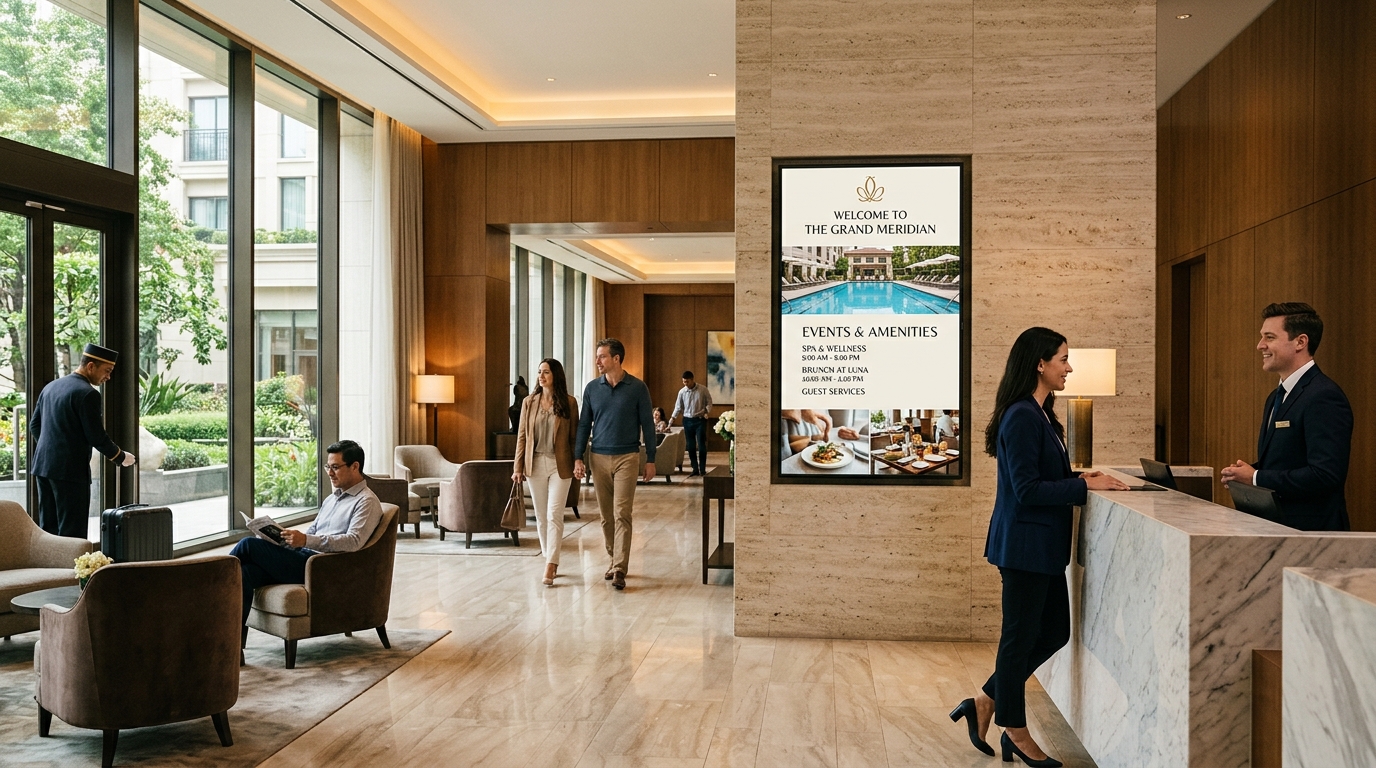
Reception and lobby: the objective here is twofold. First, reduce the perceived wait during check-in with welcome content and hotel services information. Second, activate early bookings: dinner on the first night, a welcome treatment, scheduled activities. A guest who has just arrived is receptive and has the whole stay ahead of them.
Dining areas: digital signage in buffets and restaurants has a direct impact on average spend. Showing wine pairings, daily specials or available tables at the à la carte restaurant triggers purchasing decisions at the moment of highest receptiveness. Digital buffet labels complement this approach with allergen information and dish descriptions, also reducing the volume of staff queries.
Spa and wellness areas: well-presented treatment content — high-quality images, real-time treatment availability — converts better than any brochure. If the system is integrated with the bookings module, a guest can see on screen that there is a slot free for a massage in two hours and act on it immediately.
Corridors and transit areas: exposure time is short, so the message must be direct and visual. Flash promotions, activity schedule reminders or cross-selling messages between hotel services work well in these spaces.
Time-of-day scheduling: one of the most underused features is automated content programming by time of day. A single monitor can show buffet breakfast information at 8:00, the pool offer at noon and the evening restaurant menu at 19:00. This logic improves message relevance without any additional operational effort once configured.
Metrics to evaluate performance: digital signage is not just communication — it is a sales channel. Monitoring whether spa or restaurant bookings increase during time slots correlated with on-screen campaigns allows you to refine the strategy with real insight. If F&B department GOP improves after screens are introduced in dining areas, that is a relationship worth scaling.
Conclusion
Digital signage in hotels only creates value when there is a strategy behind it: relevant content, segmented by zone and synchronised with the real operations of the property. Without that, the screens are a maintenance cost. With it, they are an active ancillary revenue channel working 24 hours a day without any team intervention.
If your hotel already has the infrastructure installed, the next step is the management layer that makes it actually work.
Want to see how it works in practice? Request a demo at hoteligy.com/demo and we’ll review together how to configure digital signage for your property.