The buffet remains the most expensive and most criticized point of hotel F&B. Poorly printed labels, incomplete allergen information, unidentified dishes, and kilograms of food thrown into the bin are direct costs that erode both GOP and NPS at the same time.
Digital buffet labels are not an aesthetic whim. They are an operational tool that tackles three fronts at once: regulatory compliance for allergens, waste control, and quality perception. In this article, we go into detail: what to measure, how to deploy them, and what results to expect in the first few weeks.
The Real Cost of the Analog Buffet
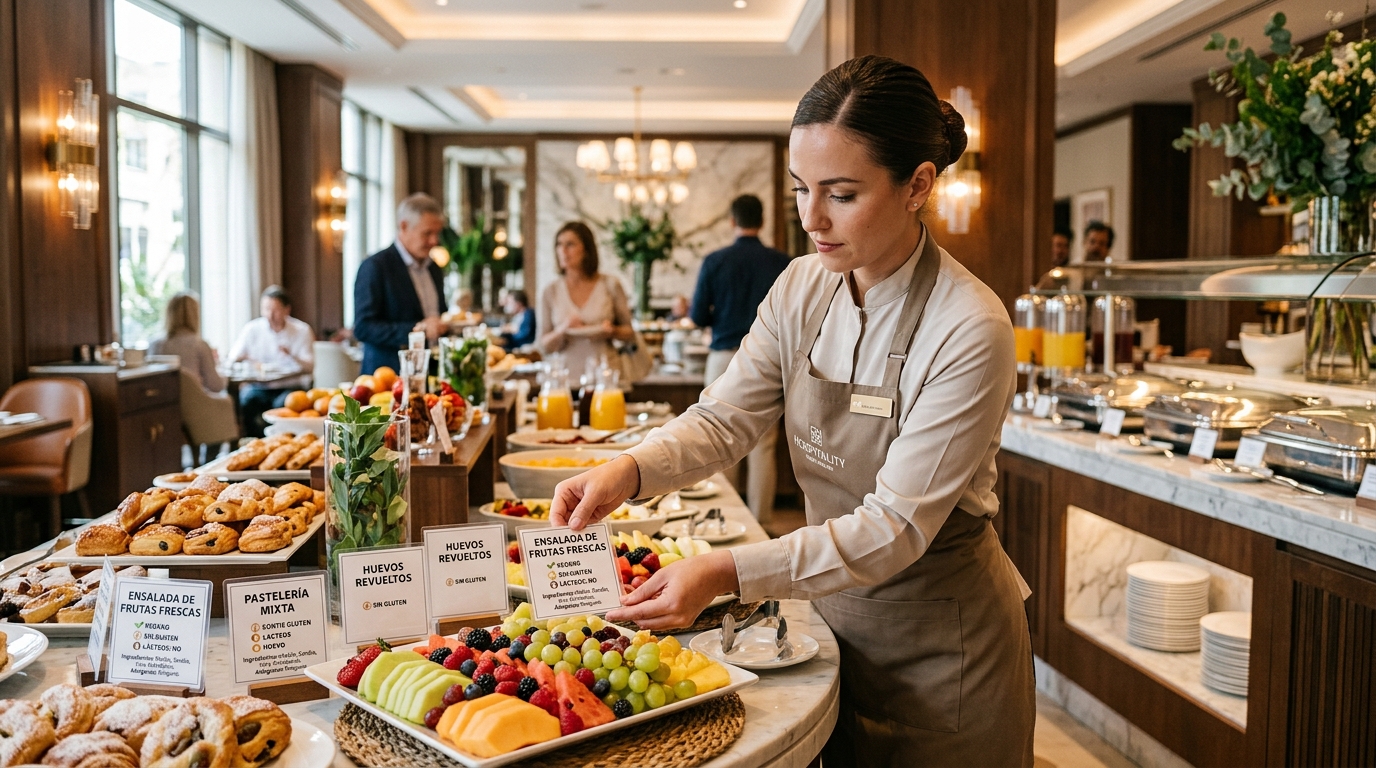
A 400-room resort with double service generates between 80 and 120 labels per service. Multiply that by three daily services and we are talking about more than 300 prints a day, involving ink, laminating, paper, and—above all—time from the kitchen and dining room teams.
To that direct cost, we must add the invisible ones:
- Allergen errors: an outdated sign or an incorrect translation is a serious incident that can end in a formal complaint.
- Unlabeled dishes: when the pace of service picks up, it is common to find unidentified trays. The guest hesitates, asks the waiter, and the flow is broken.
- Languages: manual labels are usually limited to 2-3 languages. A resort with German, French, Dutch, and Polish markets loses precision there.
- Waste due to lack of information: if the guest does not recognize the dish, they do not serve it. Waste grows on the production side and also on the consumption side (more is served than is eaten).
Studies on food waste in hospitality place buffet waste between 12% and 18% of the food produced. Every percentage point recovered in a 400-room hotel represents thousands of euros per month.
What Exactly Do Digital Buffet Labels Do?
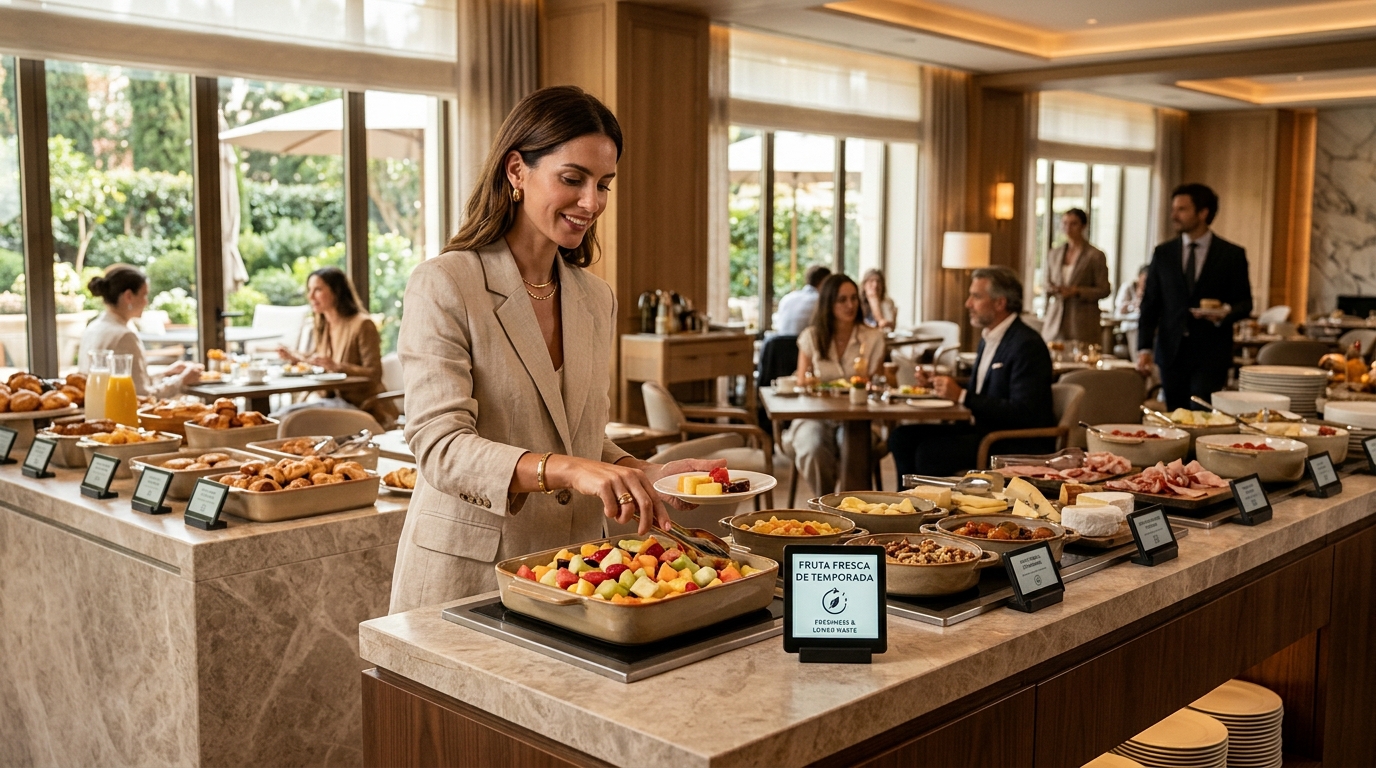
Digital buffet labels are small e-paper or LCD screens placed next to each dish on the buffet, managed from a central CMS. They display:
- The name of the dish in several languages (automatic or simultaneous rotation).
- The 14 mandatory allergens under EU regulations, using standard iconography.
- Nutritional information, values per serving, and optional traceability (origin, local sourcing, organic).
- Specific tags: vegan, vegetarian, halal, kosher, gluten-free, lactose-free, spicy.
- An image of the dish when applicable.
The operational advantage lies in the CMS. From Hoteligy’s unified CMS, F&B configures the dishes only once with their complete profile. Every service, the chef de partie drags the dishes of the day onto the buffet layout, and the labels are updated in seconds.
The Data to Look at Before and After
If you are going to justify the investment to management, measure these KPIs for 30 days before deployment and 60 days after:
Direct Labeling Cost
- Hours/person dedicated to printing, laminating, and placing.
- Consumables: paper, ink, plastics.
- Errors detected during review (allergens, translations, typos).
Food Waste
- Kg of production vs. kg served (control by section).
- Kg of plate waste (what returns from the guest’s plate).
- Tray rotation: how many are replenished whole vs. how many are emptied.
Guest Experience
- F&B scores in satisfaction surveys.
- Mentions of “buffet”, “variety”, “information” in OTA reviews.
- Registered incidents related to allergens or lack of knowledge about dishes.
Operations
- Average buffet setup time.
- Queries from the dining room to the kitchen during service.
In hotels where we have deployed the solution, the reduction in hours dedicated to labeling is usually above 70%, and allergen incidents tend to drop to zero when the dish profile is well maintained.
How to Deploy Without Friction
The most common mistake is treating the deployment as an IT project instead of an F&B operational change. This sequence works:
Week 1 — Master Dish Profile The executive chef and the head chef review the entire recipe book. Each dish must have a name in the target languages, verified allergens, dietary category, and reference photo. This is the real work. Without a clean master profile, no digital tool works.
Week 2 — Physical Installation The supports are placed on the buffet. Most e-paper labels are wireless and battery-operated with months of autonomy. No construction or wiring is needed on the buffet furniture.
Week 3 — Pilot in One Service Start with breakfast, which is the most repetitive service. Every day, details are adjusted: font sizes, language order, iconography. Let the team suggest changes.
Week 4 — Full Rollout It is extended to lunch, dinner, and themed buffets. The team already has the habit of working with the CMS.
A key aspect: integrate the labels with the rest of the digital ecosystem. When guests see a dish on the buffet that interests them, they should be able to find more information in the Guest WebApp—composition, allergens, availability in other restaurants—without friction. This continuity is what multiplies the perception of quality.
Use Cases Where the Impact is Greatest
Resorts with a Diverse International Market Four or more simultaneous languages are unfeasible with manual labeling. Digital labels solve this with zero marginal cost.
Hotels with a High Percentage of Guests with Dietary Restrictions Destinations with senior clientele, families with allergic children, or markets with religious requirements (halal, kosher). Clarity and traceability become decision-making factors.
Chains with Corporate Standards When you want to standardize the buffet presentation across 10, 20, or 50 hotels, the central CMS allows corporate templates with local flexibility. Brand changes, seasonal campaigns, or themed menus are deployed globally in hours.
Themed Buffets and Show Cooking Italian nights, Asian nights, local gastronomy. Labels are changed in one click and allow storytelling: origin of the ingredient, history of the dish, guest chef.
What to Expect in the First 90 Days
A well-executed deployment usually shows this pattern:
- Days 1-30: immediate reduction in labeling time and disappearance of typographical errors. The kitchen team recovers 1-2 hours a day per service.
- Days 30-60: improvement in F&B scores in surveys. Mentions of “clear information” and “dietary options” increase in reviews.
- Days 60-90: food waste reduction stabilizes. With good discipline from the start, waste drops between 3 and 8 percentage points.
The ROI of digital buffet labels in a 300+ room hotel is usually recovered in 6-12 months solely through savings in food waste and consumables. The improvement in experience and regulatory compliance is an additional benefit.
Conclusion
The buffet is one of the few areas of the hotel where you can simultaneously move three critical levers: cost, experience, and compliance. Digitalizing labeling is not about replacing cardboard with screens—it is about redesigning the flow of information between kitchen, dining room, and guest.
Hotels that have been using digital buffet labels for some time do not go back. The reason is not aesthetics; it is that operations become cleaner, errors disappear, and food waste data can finally be managed with precision.
If you are evaluating digitalizing your buffet, the next step is to see the solution working with real data from hotels similar to yours.
Ready to reduce food waste and elevate the F&B experience? Request a personalized demo with concrete cases for your type of establishment at hoteligy.com/demo