The hotel folio remains the document that underpins the entire accounting of a stay, but most hotels manage it with legacy workflows that generate friction at check-out, charge errors, and avoidable complaints. Digitalizing it is not a technological whim: it directly impacts GOP, NPS, and the average time spent at the front desk.
What is a hotel folio?
A hotel folio —also called a guest folio or guest account— is the detailed record of all financial transactions associated with a reservation during the stay. It includes room charges, taxes, F&B consumption, spa, laundry, minibar, excursions, deposits, and partial payments.
In essence, it is the statement the guest receives upon check-out. But internally, it is much more: it is the source of truth against which cash is reconciled, revenue is reported to the revenue manager, and ancillaries are audited.
Types of folios managed by a hotel
- Guest folio (individual): the guest’s personal account.
- Master folio: groups common charges for a group, event, or tour operator.
- Non-guest folio: external clients without accommodation (weddings, banquets, day passes).
- Employee folio: internal consumption by staff.
- Split folio: division of charges between company and guest (typical in business travel).
The problem: an analog folio is an expensive folio
Although most hotels already operate with a PMS that generates electronic folios, the operational reality remains hybrid. Paper tickets signed at the bar that someone must manually post. Written notes to reception that get lost. Charges that appear without proof and trigger complaints at check-out.
The consequences are measurable:
- High check-out times: reviewing line by line with an unsatisfied guest consumes agents and generates queues.
- Unrecoverable late charges: last-day consumption that does not reach the folio before departure.
- Posting errors: charges to the wrong room, especially in partial all-inclusive resorts.
- Lost upselling opportunities: without real-time visibility of the folio, the guest does not know what they are spending and the hotel does not know whom to offer an upgrade to.
For a 300-room hotel, a 2% error rate on charges can equate to thousands of euros per month in disputes and refunds.
What “digital folio” really means
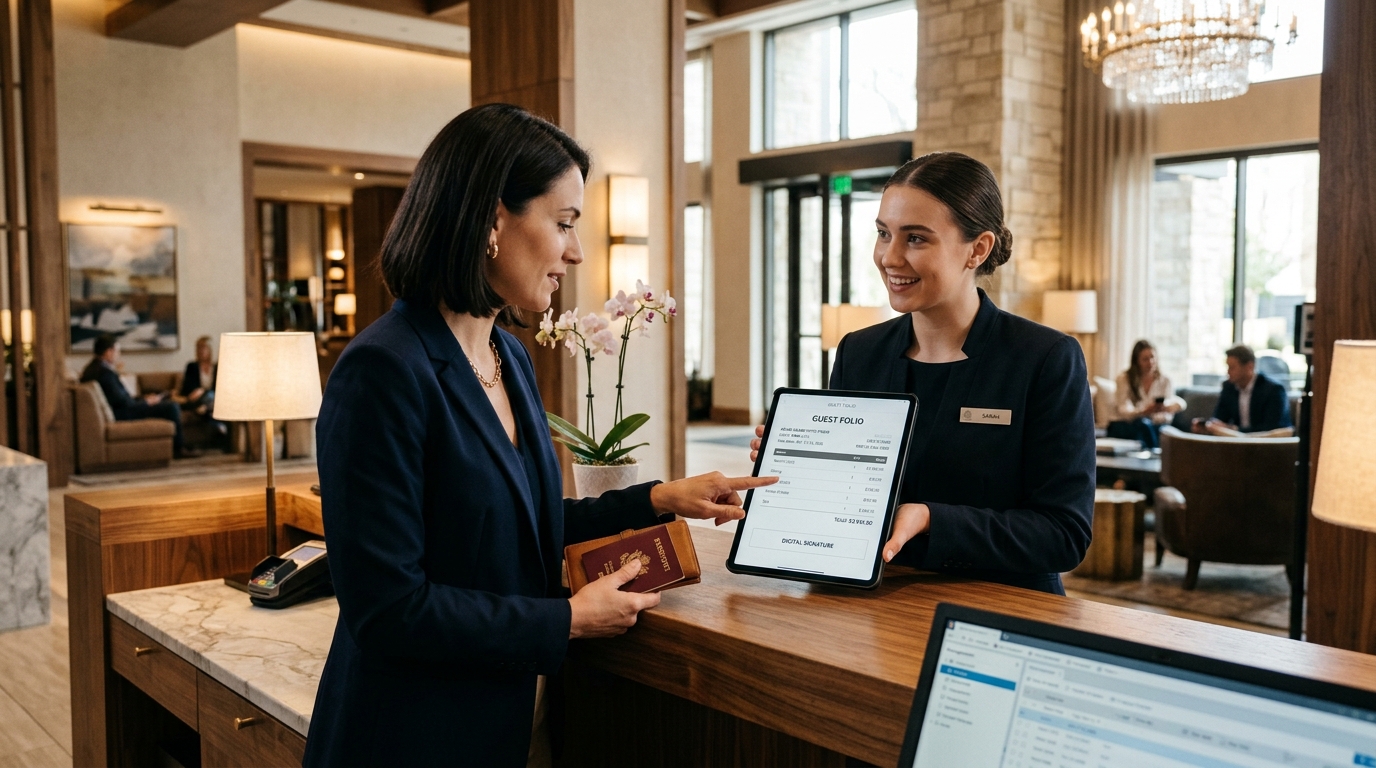
Digitalizing the folio is not just about issuing it in PDF. It means that every guest touchpoint posts charges directly to the PMS without manual intervention, and that the guest can check their account at any time from their mobile phone.
This requires three layers:
- Digital capture of consumption at all points of sale (restaurant, spa, room service, shop).
- Two-way integration with the PMS so that every charge is reflected instantly.
- Visibility for the guest without going through reception.
Hoteligy addresses this architecture from a unified CMS that connects operational modules with the PMS, avoiding duplications and manual reconciliations.
How to digitalize the folio step by step
1. Start with pre-check-in
The folio is born before the guest arrives. With PreCheck-in Online, the hotel captures payment details, identity documents, and billing preferences before arrival. This allows for issuing separate invoices (company/guest), validating cards, and reducing counter time to minutes.
In addition, pre-check-in enables split folio from the source: the guest indicates which charges go to their company and which ones they assume, avoiding discussions at the end.
2. Post consumption in real time
Every point of sale must feed the folio automatically. This is where three key modules come in:
- Room Service Digital: the guest orders from their mobile, and the charge is posted instantly.
- QR Orders at the pool, terrace, or bar: paperless payment to the room.
- Spa Booking and other premium services: the confirmed booking generates the provisional charge.
This eliminates the classic late charge: consumption appears on the folio in seconds, not at the end of the shift.
3. Provide visibility to the guest
A guest who can check their folio on their mobile complains less at check-out. The Guest WebApp shows updated charges, allows for resolving doubts before departure, and enables express check-out: the guest reviews, confirms, and leaves.
The secondary effect is relevant for revenue: when guests see their spending in real time, they normalize consumption and increase average ancillary spend.
4. Close the cycle with automatic auditing
The night audit stops being a manual task of several hours. If all charges enter through the system, reconciliation is reduced to reviewing exceptions. The revenue manager obtains reporting by segment, channel, and service type without extracting data by hand.
Quick FAQs about the hotel folio
Are folio and invoice the same thing? No. The folio is the accumulated record of charges during the stay; the invoice is the fiscal document issued at closing. A folio can generate several invoices (split).
How long must a folio be kept? It depends on local legislation, but usually between 5 and 10 years for tax and audit purposes.
Can the guest modify their folio? Not directly. They can request corrections, which the hotel validates and posts.
Is it safe to show the folio on the WebApp? Yes, as long as access is authenticated by reservation and room number, with encryption in transit.
Conclusion
The hotel folio is one of those invisible elements whose digitalization pays dividends on multiple fronts: less counter time, fewer disputes, more captured ancillary revenue, and a check-out that stops being a bottleneck. It is not about changing the PMS, but about connecting all guest touchpoints to it and giving the customer the visibility they already expect from any digital service in 2026.
Hotels that already operate this way do not compete in the same operational league. And the difference is noticeable in the P&L.
Want to see what the digital folio cycle would look like in your hotel? Request a personalized demo at hoteligy.com/demo and we will show you the complete integration with your current PMS.