The concept of “hotel innovations” no longer refers just to in-room gadgets. In 2026, we are talking about a connected digital ecosystem that directly impacts RevPAR, NPS, and operational efficiency, yet many hotels continue to pilot isolated solutions without an integrated strategy.
What do we mean by hotel innovations in 2026?
The term “hotel innovations” groups together all the technologies that modify how the guest interacts with the hotel and how the hotel operates internally. It is not about adopting a specific tool, but rather about orchestrating several layers: guest communication, operational automation, real-time data, and ancillary revenue monetization.
Three categories are driving the conversation this year:
- Guest touchpoint technologies: Guest WebApp, AI chatbots, Smart TV, interactive kiosks, digital signage.
- Operational technologies: incident management, internal bookings, capacity control, PMS integration.
- Intelligence technologies: real-time surveys, behavioral analytics, segmentation for upselling.
The common mistake is buying individual pieces from different providers and ending up with fragmented data. The clear trend in 2026 is to consolidate everything under a unified CMS that centralizes content, data, and business rules.
The context: why now
Three forces explain this acceleration:
1. Guests arrive with high digital expectations. The same customer who orders an Uber in 30 seconds does not understand waiting 15 minutes for a reply to a hotel WhatsApp or having to go down to reception to book the spa.
2. Pressure on operating margins. Labor costs continue to rise and staff turnover in reception and F&B forces the digitalization of repetitive tasks: check-in, requests, frequent inquiries, and orders.
3. Ancillary revenue is the new battleground. With room rates under pressure, the real margin is generated in the restaurant, spa, excursions, and premium services. Without digital channels to drive that offer, money is left on the table.
In this context, “hotel innovations” stop being an IT project and become a revenue management decision.
The technologies shaping 2026
Download-free Guest WebApp
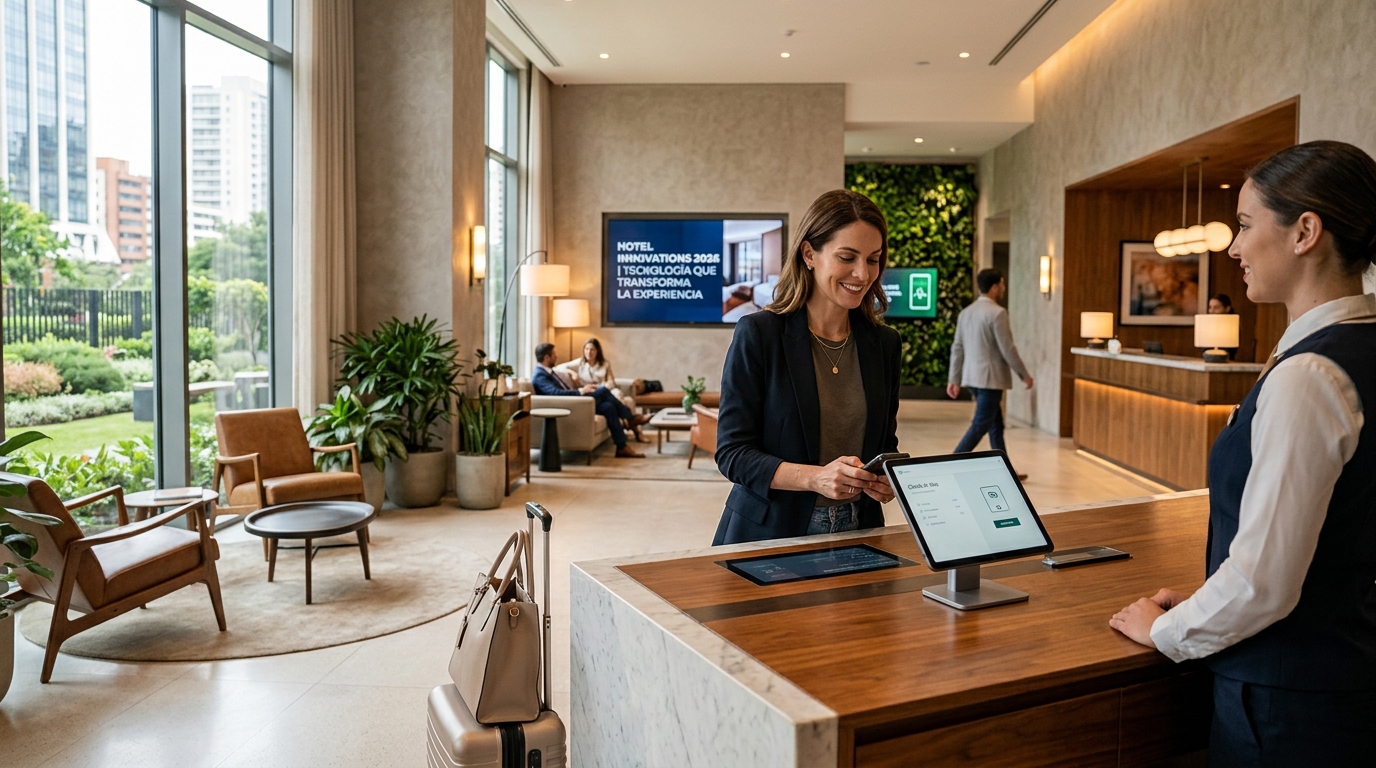
The Guest WebApp has consolidated itself as the main touchpoint. It works from any browser, without downloads or friction, and replaces the room directory, the switchboard, and a large part of the reception workload.
From a single URL (or a QR code in the room), guests can check schedules, book restaurants, request services, report incidents, and purchase extras. Today, it is the foundation upon which any serious digital strategy is built.
Chatbots with generative AI
The qualitative leap of 2025-2026 lies in AI chatbots trained with hotel information. They resolve 60-80% of frequent inquiries in any language, 24/7, and escalate to the human team only those cases that require it.
The impact is felt in two areas: operational relief for reception and reduced response times on channels like WhatsApp.
Digital Signage and Smart TV
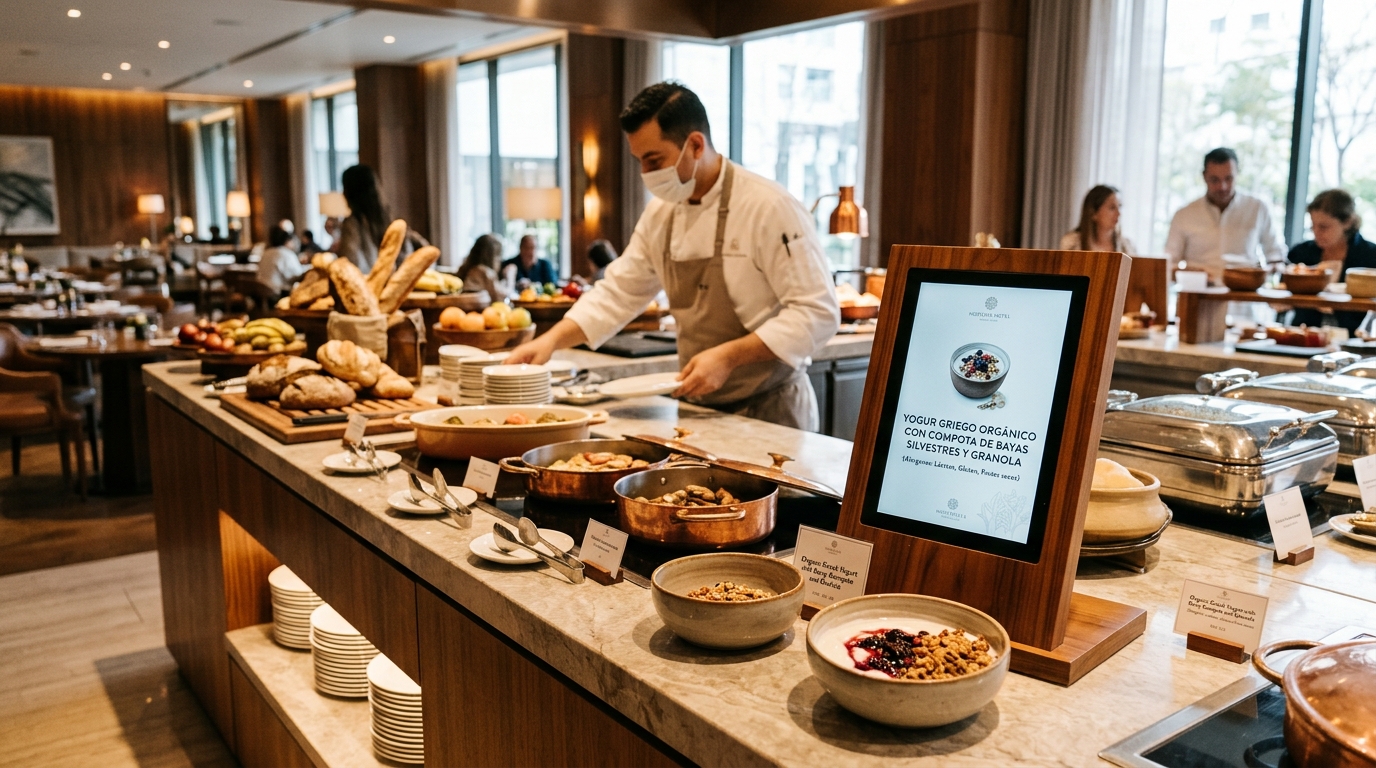
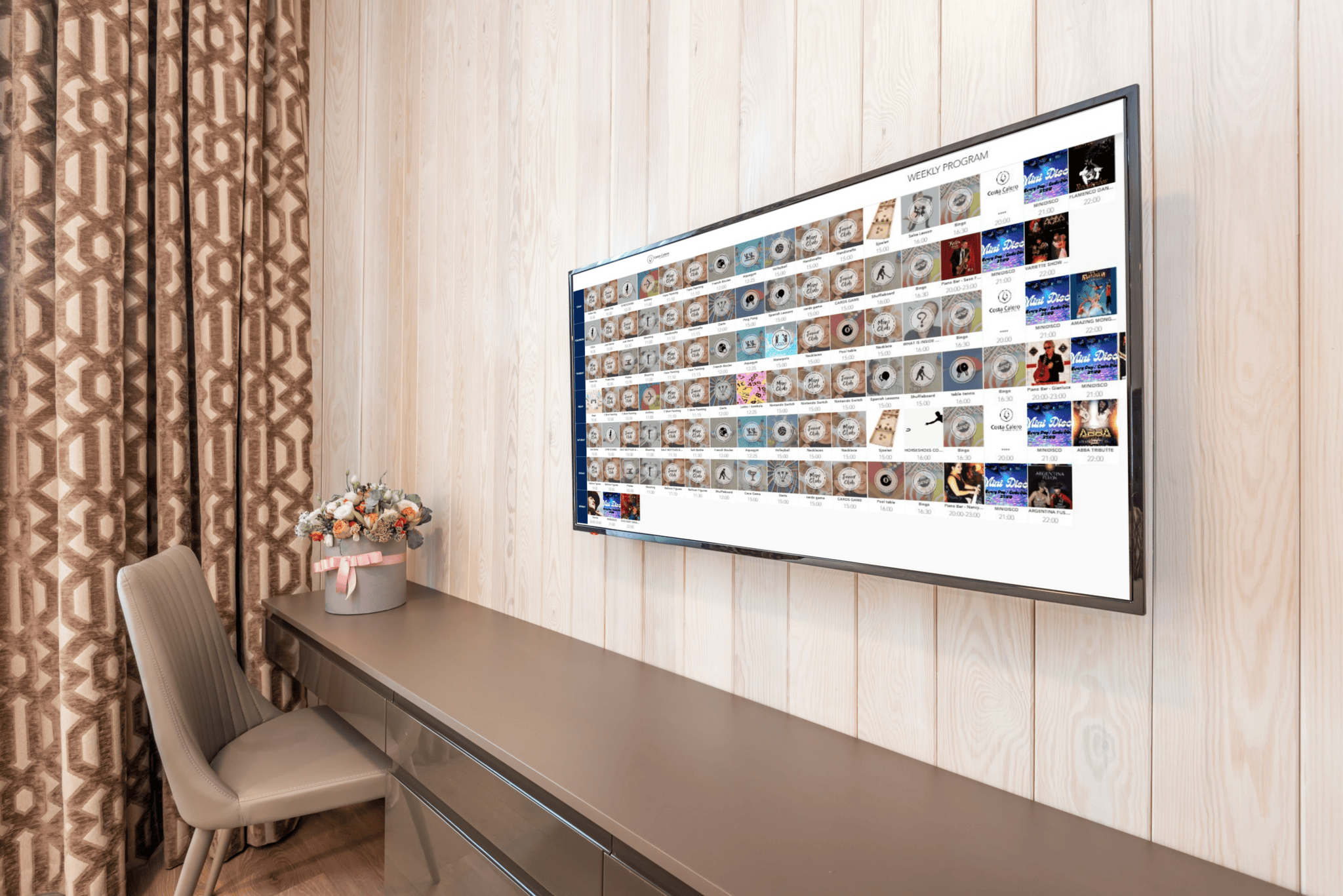
Information screens in common areas and the Smart TV App in the room close the loop. The same content, managed from a single panel, adapted to the context: the lobby shows the day’s activities, while the in-room TV promotes the spa or tonight’s themed restaurant.
When used well, they are an in-stay marketing channel with an extremely efficient marginal cost per impact.
Interactive kiosks and self-service
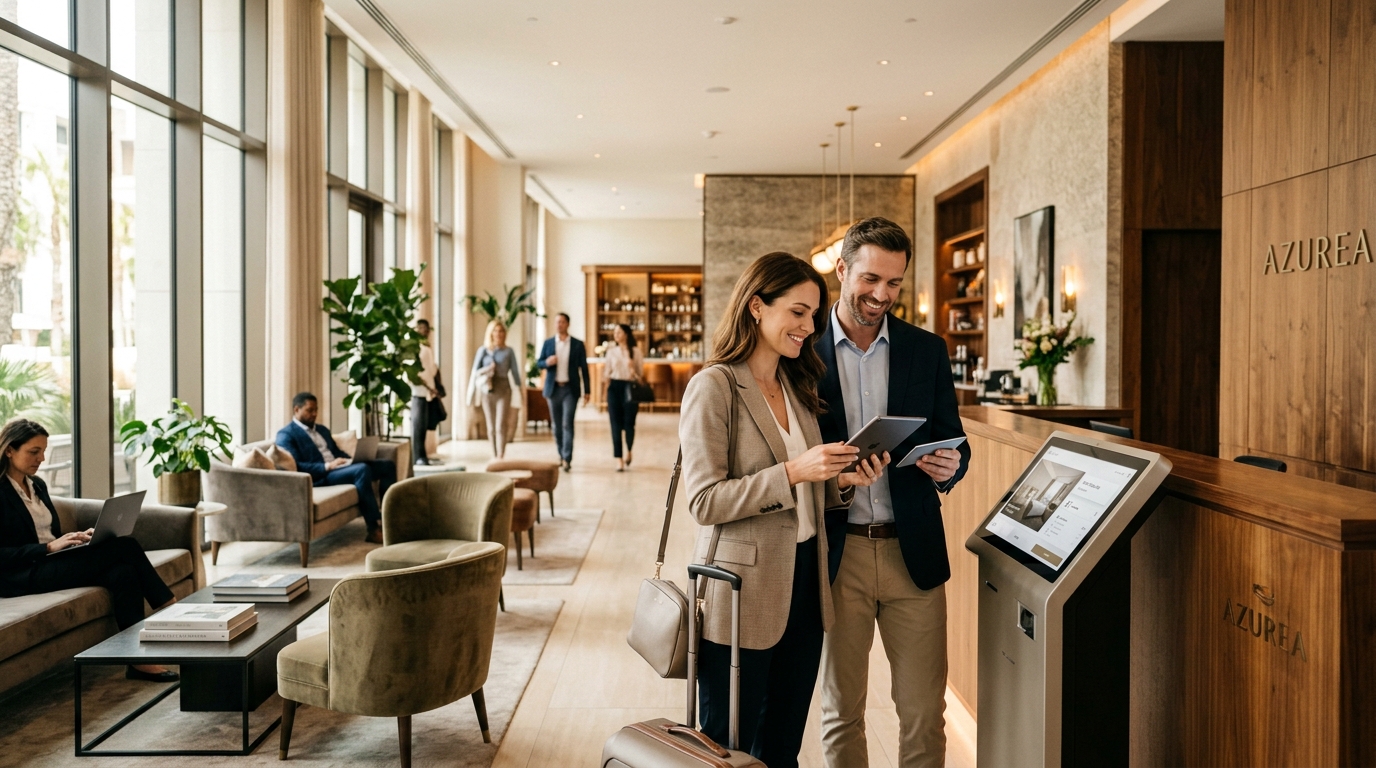
Interactive kiosks manage check-in, inquiries, activity bookings, and information delivery without human intervention. In large resorts, they relieve reception during peak hours and improve the perception of agility.
How to apply it: a practical roadmap
There is no need to deploy everything on day one. The sequence that works for hotels that have already done it is usually:
Phase 1 — Guest digital foundation (Month 1-2). Activate the Guest WebApp as the single entry point. Replace physical directories, maps, and paper forms. Measure adoption and digital vs. analog requests.
Phase 2 — Inquiry automation (Month 2-3). Integrate the AI chatbot into the Guest WebApp and WhatsApp. Monitor what percentage of inquiries are resolved without human intervention.
Phase 3 — In-stay marketing channels (Month 3-4). Deploy Digital Signage in common areas and Smart TV in rooms. Connect the restaurant, spa, and excursion offers to the right channel at the right time.
Phase 4 — Operations and data (Month 4-6). Activate operational modules (incidents, internal bookings, capacity control) and close the loop with surveys and analytics.
The key is that all these pieces talk to each other. An incident opened from the Guest WebApp must reach the maintenance team without rewriting anything; a booking from the chatbot must automatically block the restaurant capacity. That is why the platform on which it is built matters so much.
Frequently Asked Questions
Is a downloadable app necessary? No. In 2026, the clear trend is a download-free Guest WebApp: less friction, higher adoption, and zero app store management.
How long does integration with the PMS take? With standard connectors, a matter of days. The real complexity lies in cleaning data and defining flows, not in the technical integration.
Does it replace reception staff? It does not replace them; it frees them from repetitive tasks so they can focus on VIP guests, complex complaints, and face-to-face upselling.
How is ROI measured? Three indicators: decrease in calls/inquiries at reception, increase in ancillary revenue per occupied room, and the evolution of post-stay NPS.
Conclusion
The hotel innovations of 2026 are not a collection of gadgets, but a shift in how the experience and operations are designed. The hotels gaining an advantage are not those with “more technology,” but those that have it connected: Guest WebApp, AI, Digital Signage, TV, and operations working as a single system with a single management point.
Hoteligy was born precisely for this: to integrate the hotel’s entire digital ecosystem under a 360 CMS with consistent data and a coherent experience at every touchpoint. More than 200 hotels—including Radisson, H10, Iberostar, and Princess—already operate this way.
Want to see how this would apply to your hotel? Request a personalized demo at hoteligy.com/demo and explore the complete ecosystem.