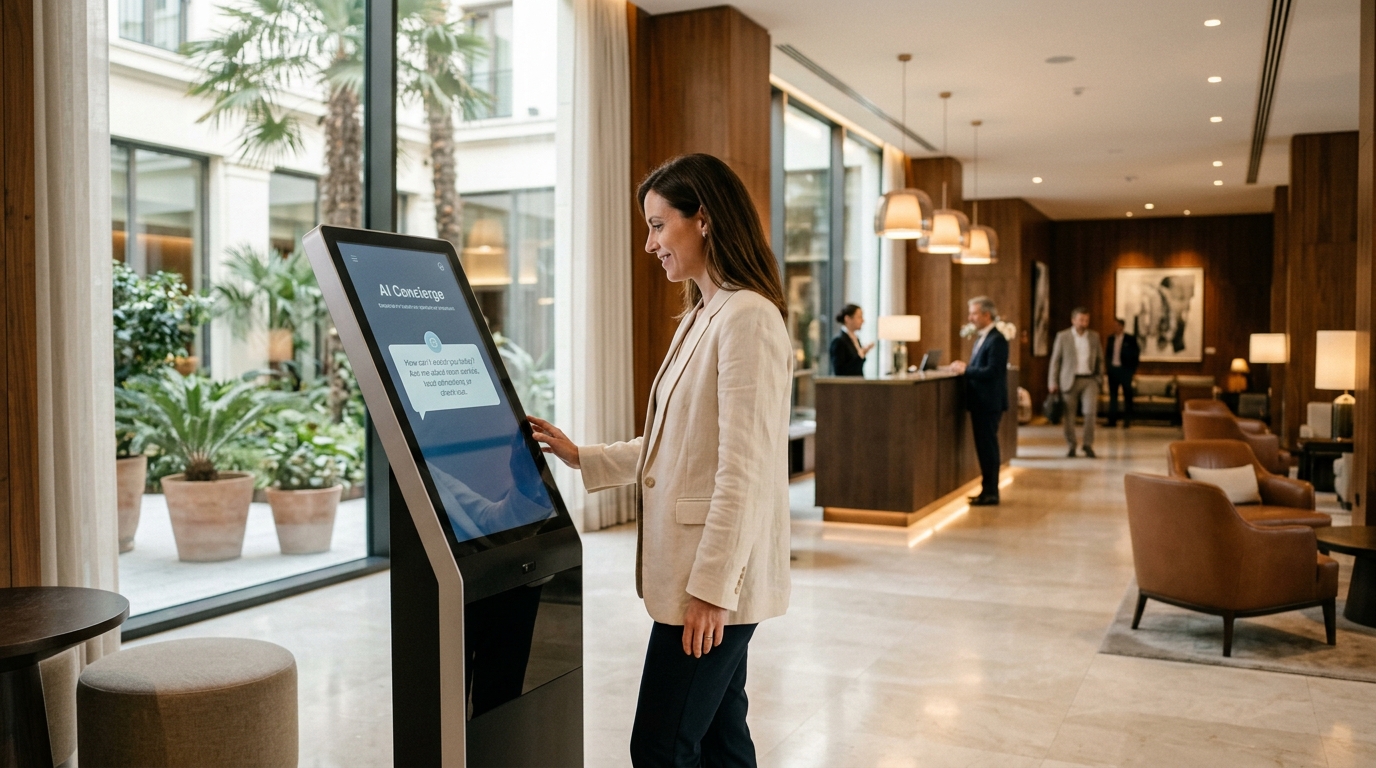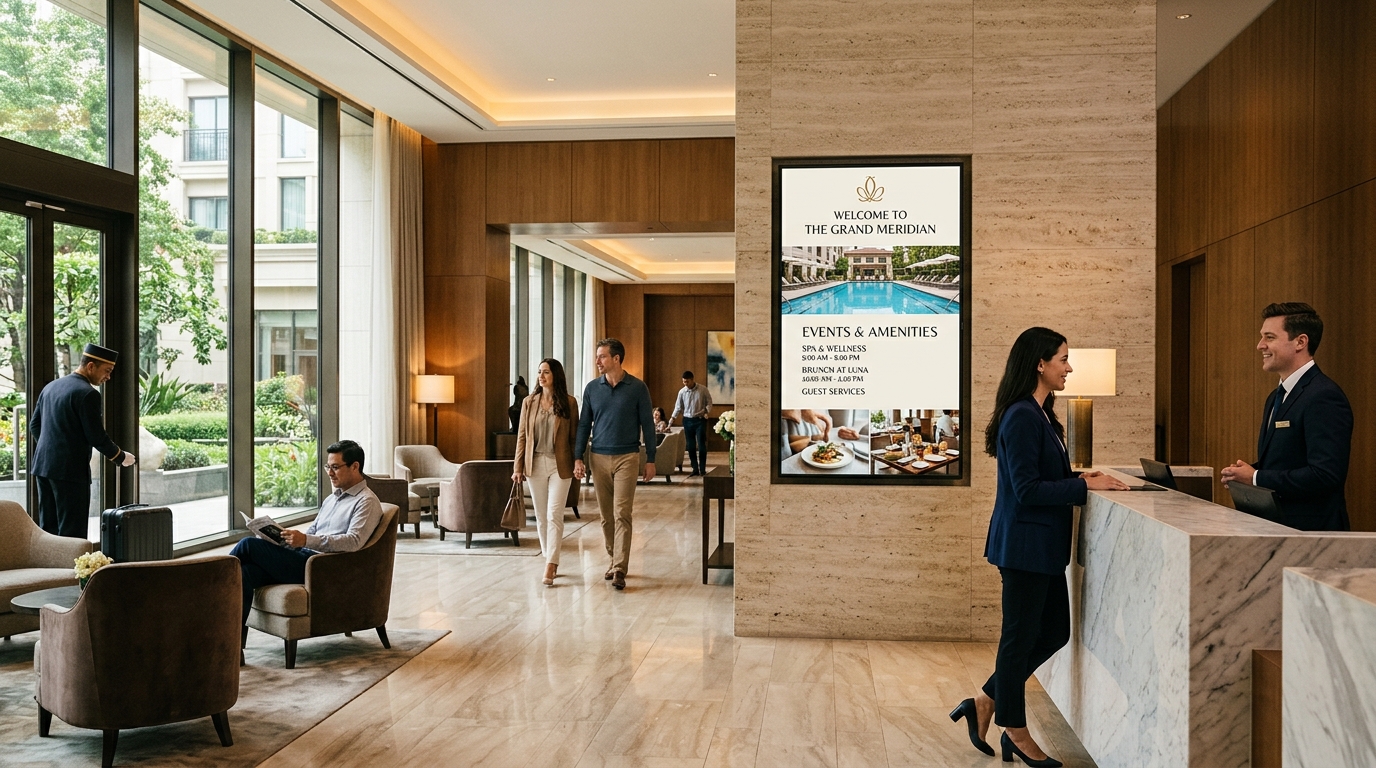
Printed in-room directories are a thing of the past. The shift towards smartphones and the evolution of guest behaviour have made traditional directories obsolete, pushing hotels to explore sustainable alternatives.
Is it worth keeping printed directories?
High printing costs
Traditional directories represent a significant expense. Because hotel services and schedules change constantly, printed materials become outdated quickly. Physical wear and tear — crumpled, wet, or dirty pages — creates a negative impression on the guest.
Key figure: A 100-room hotel spends approximately €3,000 per year replacing worn-out directories, calculated at €30 per unit.
Outdated information
When menus change or service hours are modified, staff must reprint materials and physically replace the information in every room. This creates guest dissatisfaction when incorrect information is found.
Inadequate format
“It says so in the directory, but nobody reads it,” many hoteliers report. Today’s guests look for organised, accessible information without interrupting their holiday time. Additionally, sustainability-conscious guests view printed materials as wasteful.
Benefits of digital directories
- Cost-effectiveness — Digital solutions are significantly cheaper than printed ones, with added functionality.
- Real-time updates — Changes are deployed within two minutes, ensuring information is always up to date.
- Superior format — An app with a built-in search function lets guests type “spa” and access full information: opening hours, treatment menu, and booking options.
Maximising the potential of the digital directory
Strategy 1: Welcome card
Replace check-in paperwork by inviting guests to access the app, increasing engagement and ensuring they are aware of all available information.
Strategy 2: QR codes throughout the hotel
One of the most sustainable options is to progressively remove all printed materials and replace them with a QR code. A QR code at the pool linking to water quality parameters, a QR code at the restaurant opening the digital menu.
Strategy 3: Personalise content by guest type
Customise the information shown based on the type of guest, room type, or board basis. Jacuzzi instructions only reach rooms that have one; family events only appear for families; upgrade offers are directed at the right segment.
Result: The right information to the right people.
Real savings analysis
A 485-room hotel in Tenerife documented 920,375 app queries during 2022. If even 10% of those queries would have required front-desk staff at one minute each, the annual saving reached 1,534 hours — equivalent to approximately €16,873 in staff costs.
Conclusion
Digital directories do not replace receptionists, but they substantially reduce their workload. Guest surveys confirm that independent access to information saves holiday time by avoiding queues and waiting at the front desk.