Managing a hotel buffet means juggling allergen compliance, real-time content updates, and guest communication across dozens of dishes simultaneously. Paper labels solve none of that — they create operational overhead, inconsistency, and a guest experience that is hard to defend when a guest with a nut allergy is relying on what is written on a laminated card.
Why Traditional Buffet Labels Have Become a Liability
The buffet is one of the highest-traffic touchpoints in any full-service hotel or resort. It runs multiple services a day, rotates dishes constantly, and hosts guests from a dozen different nationalities — each with their own dietary requirements, language preferences, and expectations around transparency.
Paper or printed labels were never designed for that environment. Reprinting takes time, inconsistencies creep in, and the moment a dish changes or an ingredient is swapped by the kitchen, there is a lag before the label reflects reality. That lag carries real risk, both legal and reputational.
Allergen regulations have also tightened across most markets. Whether you operate under EU Regulation 1169/2011 or local equivalents, the obligation to communicate the 14 major allergens accurately and legibly is non-negotiable. Managing that manually across a buffet with 40 or 50 dishes is operationally fragile.
Beyond compliance, there is a revenue angle that often gets overlooked. The buffet is included in the room rate for most all-inclusive and half-board guests, which means every interaction at the buffet is a missed upselling opportunity unless you actively design it otherwise. Premium beverages, à la carte add-ons, spa promotions, restaurant reservations — these can all be surfaced at the exact moment a guest is engaged and paying attention. Paper labels cannot do that.
The gap between what traditional buffet labels deliver and what hotels actually need has widened considerably.
What Digital Buffet Tags Actually Do
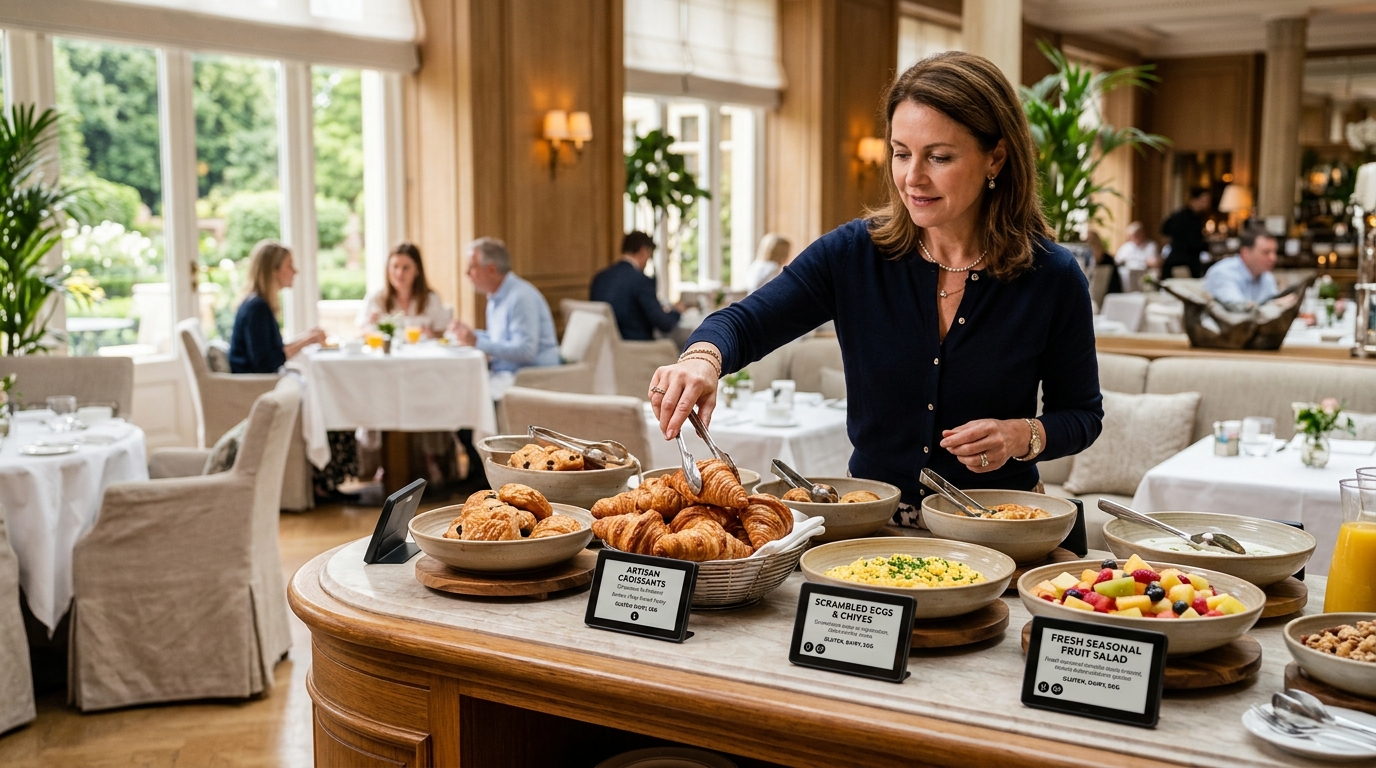
Digital buffet tags are electronic display labels placed at each dish station. They replace static printed cards with remotely managed screens that can show dish names, ingredients, allergen icons, caloric information, country of origin, and promotional content — all updated centrally from a single dashboard.
The core operational value is speed and accuracy. When the kitchen substitutes an ingredient or removes a dish entirely, the update propagates instantly across every tag in the buffet. There is no reprinting, no manual swap, no risk of an outdated label staying in place because a team member did not notice.
Most implementations support multilingual display, which matters in hotels where guest mix spans multiple language markets. Showing allergen and ingredient information in the guest’s own language is a meaningful improvement to the buffet experience and removes friction for guests who might otherwise simply avoid a dish they cannot read clearly.
From an operational standpoint, digital buffet tags also reduce the daily workload on F&B staff. Centralizing content management means one person can update the entire buffet in minutes rather than printing, laminating, and distributing labels across multiple stations.
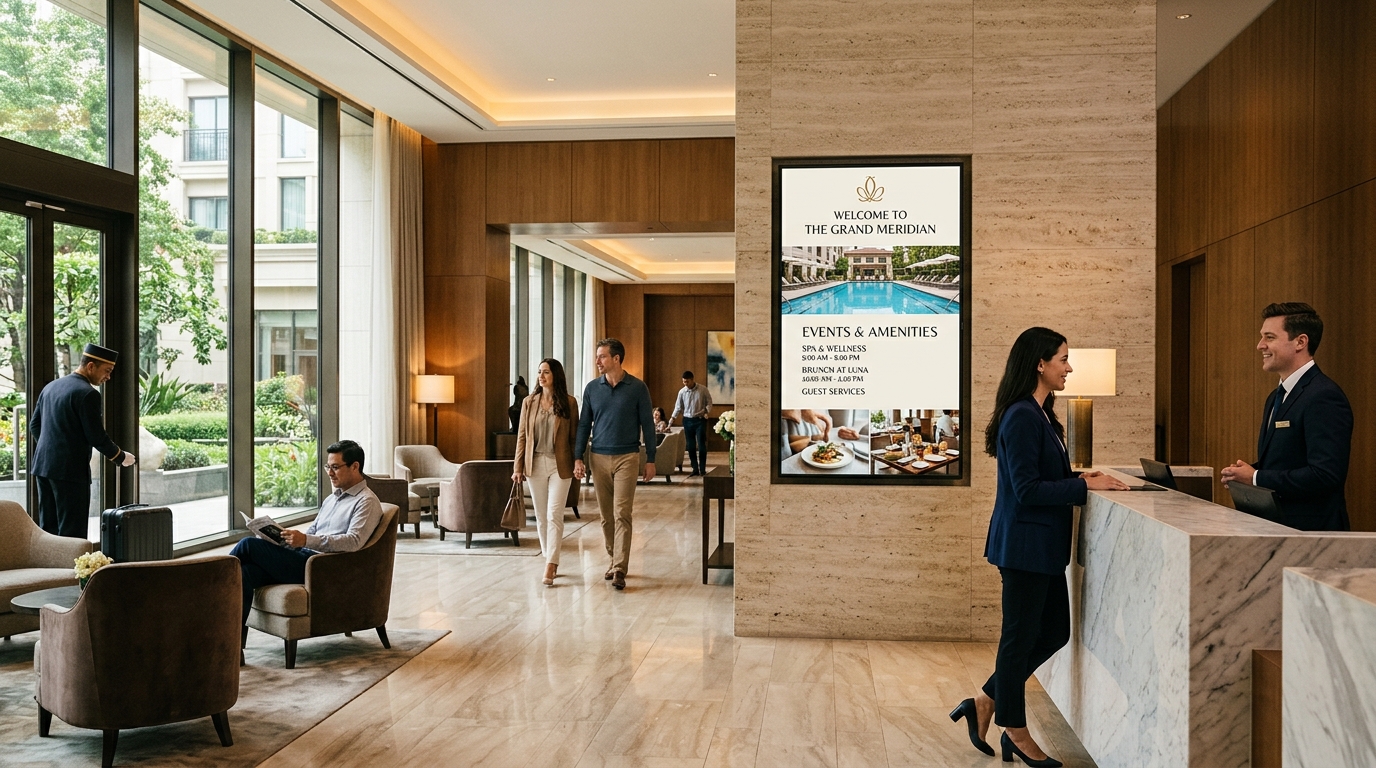
The Hoteligy digital buffet tag solution integrates with the broader CMS so that content shown at the buffet can be synchronized with the rest of the hotel’s digital touchpoints — including Digital Signage, the Guest WebApp, and the Smart TV App — creating a consistent information layer across the property.
How to Deploy Digital Buffet Tags Effectively
Getting the technology in place is only part of the equation. How you configure and manage digital buffet tags determines whether they stay as a compliance tool or become an active contributor to TRevPAR.
Start with a clean content structure. Before deployment, audit your full buffet menu catalog. Standardize dish names, allergen classifications, and ingredient descriptions. This groundwork pays off immediately: the content you load into the system should be accurate, complete, and ready to display on day one. If your F&B team relies on ad hoc descriptions, the tags will surface the inconsistency.
Assign content ownership. Designate who in the kitchen or F&B team is responsible for updating dish content. The system makes updates easy, but someone needs to own the workflow. In most properties this sits with the executive chef or F&B supervisor, with a front-of-house liaison for promotional content.
Use the promotional slot deliberately. Most digital buffet tag systems include a display area for secondary content alongside the dish information. This is where you surface ancillary offers. A guest reading the dessert tags is a good candidate for a cooking class, a wine pairing dinner, or a restaurant reservation. Keep the message short, rotate it by meal period, and align it with whatever you are actively pushing in revenue terms. Lunch service is different from dinner; weekend guests have different conversion windows than weekday business travelers.
Leverage allergen icons as a guest experience signal. Clear, standardized allergen iconography — not just text — communicates that the hotel takes dietary requirements seriously. For guests managing celiac disease, severe nut allergies, or religious dietary restrictions, this builds trust that translates directly into NPS. It is a low-cost quality signal with measurable impact on satisfaction scores.
Integrate with your broader digital layer. If you are running a Guest WebApp or Digital Signage across the property, your buffet content should not exist in isolation. Synchronizing updates across touchpoints means a guest who checked the day’s menu on their phone sees the same information reflected at the buffet station. This consistency removes doubt and reduces questions to staff.
Track engagement where your system allows. Some digital buffet tag platforms provide basic analytics on content display and interaction. If yours does, use that data during operational reviews. Understanding which promotional messages get ignored versus which drive reservations or F&B upsells is useful intelligence for your revenue strategy.
Finally, plan for scalability. If you operate multiple dining venues — main buffet, pool bar, beach restaurant — the ability to manage all locations from a single dashboard matters. Managing separate systems per venue fragments the operational benefit you are trying to capture.
Conclusion
Digital buffet tags address a real operational problem — allergen compliance, content accuracy, and real-time updates — while opening a channel for ancillary revenue that paper labels simply cannot. The technology is mature enough in 2026 that the question is no longer whether to adopt it, but how to configure it to extract the most value across your F&B operation. Hotels that treat the buffet as a passive, cost-center touchpoint are leaving a meaningful revenue and NPS opportunity unaddressed.
See how digital buffet tags work inside Hoteligy’s platform. Book a demo at hoteligy.com/demo and we will walk you through a live setup tailored to your property.